
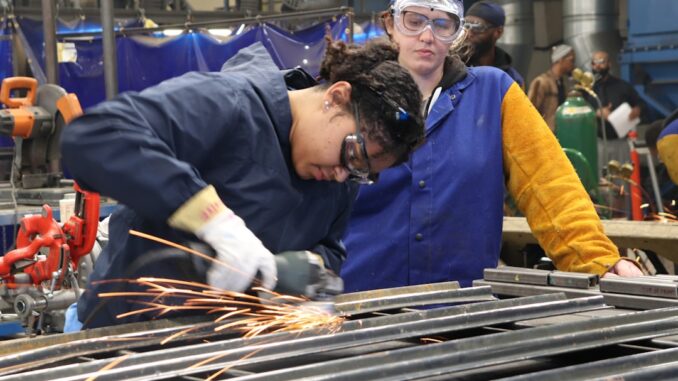

In the face of rapid technological advancements, particularly in artificial intelligence (AI), young workers in Britain are reevaluating their career paths. The allure of AI-driven efficiencies and automation has raised fears of job displacement, prompting a significant shift towards skilled trades.
The Shift Towards Skilled Trades
Maryna Yaroshenko, an 18-year-old student from Ukraine, exemplifies this trend. Enrolled at the City of Westminster College in London, she is training to become a plumber. “That’s something AI won’t take over,” Yaroshenko asserts, emphasizing the hands-on nature of her chosen profession. (channelnewsasia.com)
This sentiment resonates with many young individuals who perceive manual labor roles as more secure in an era dominated by AI. White-collar jobs, often associated with routine tasks, are viewed as more vulnerable to disruption by automation. A survey by the Chartered Institute of Personnel and Development revealed that one in six employers anticipate reducing their workforce in the next 12 months due to AI integration. (channelnewsasia.com)
Need a mortgage? Focus360 Energy provides Professional Consultant Certificates. Learn more.
Rising Interest in Vocational Education
The growing apprehension about AI’s impact on employment has led to a surge in interest in vocational education. Institutions like the City of Westminster College have reported a 9.6% increase in enrollments for engineering, construction, and built environment courses over the past three years. CEO Stephen Davis attributes this rise to both AI concerns and the escalating costs of university education. (channelnewsasia.com)
Angela Joyce, CEO of Capital City College, observes a similar trend. She notes a strong growth in interest in construction, plumbing, hospitality, and other trades, indicating a broader recognition of the value in becoming skilled professionals. (channelnewsasia.com)
Economic Considerations and Job Security
Financial incentives also play a role in this shift. According to the Office for National Statistics, plumbers earn an average of £37,881 per year, while skilled construction and building trades workers typically make around £35,764. These figures compare favorably with the overall average salary of £39,039 across all sectors. Moreover, skilled trades often provide greater opportunities for self-employment, enhancing earning potential. (channelnewsasia.com)
The Aging Workforce and Future Demand
An aging workforce in the trades sector further underscores the demand for new professionals. Yaroshenko points out that the current workforce is aging, and the need for a new generation of skilled workers remains high. This demographic shift suggests a sustained demand for tradespeople in the coming years. (channelnewsasia.com)
Challenges and Opportunities
While the shift towards skilled trades offers promising prospects, it is not without challenges. The stigma associated with manual labor persists, and the physical demands of these professions can deter some individuals. Additionally, the rapid evolution of AI technology means that the landscape of job security is continually changing, requiring workers to adapt and acquire new skills.
Conclusion
The growing apprehension about AI-induced job losses has catalyzed a significant shift among young Britons towards skilled trades. This movement reflects a strategic response to the evolving job market, emphasizing the value of hands-on professions in an increasingly automated world. As the demand for skilled tradespeople continues to rise, these professions offer promising career paths for the next generation.
Be the first to comment