

Abstract
Light Detection and Ranging (LiDAR) technology has fundamentally reshaped the landscape of remote sensing by delivering unparalleled precision in three-dimensional spatial data acquisition. This comprehensive report meticulously explores the foundational scientific principles underpinning LiDAR operations, details the diverse array of system types—encompassing airborne, terrestrial, mobile, and emerging spaceborne platforms—and elucidates its extensive applications across a multitude of scientific, industrial, and governmental disciplines. A particular emphasis is placed on the synergistic integration of LiDAR data with other heterogeneous geospatial information sources and the transformative role of advanced artificial intelligence methodologies in elevating data processing efficiency, analytical sophistication, and automated feature extraction. Furthermore, the report critically examines the prevailing challenges confronting LiDAR adoption and development, alongside forecasting the promising future trajectories of this evolving technology, especially within the critical domains of urban planning, environmental stewardship, autonomous systems, and disaster resilience.
1. Introduction
LiDAR, an acronym for Light Detection and Ranging, stands as a pivotal active remote sensing technology that harnesses precisely timed laser pulses to accurately determine distances to targets, thereby constructing high-resolution, three-dimensional spatial datasets. Its inception dates back to the early 1960s with the invention of the laser, initially finding specialized applications in atmospheric research and ranging for military purposes. However, it was the integration with Global Positioning System (GPS) technology in the 1990s that truly unlocked its potential for detailed topographic mapping, revolutionizing disciplines ranging from geomatics and forestry to archaeology and urban development. This technological confluence enabled the precise georeferencing of individual laser measurements, transforming raw distance readings into geographically accurate spatial coordinates.
The intrinsic capability of LiDAR to penetrate vegetative canopies, albeit partially, and generate highly detailed bare-earth digital terrain models (DTMs) sets it apart from traditional photogrammetry. This unique characteristic has made it indispensable for understanding complex environmental systems, mapping sub-canopy features, and producing highly accurate topographical representations that underpin informed decision-making processes across a spectrum of governmental, scientific, and commercial sectors. The data derived from LiDAR systems—typically vast point clouds—offer an unprecedented level of detail, providing not just surface geometry but also intensity values and, in some advanced systems, spectral information, thereby enriching the interpretative potential of the acquired spatial data.
2. Principles of LiDAR Technology
At its core, LiDAR technology operates on the fundamental principle of time-of-flight (TOF) measurement. A LiDAR system actively emits rapid, discrete laser pulses towards a target surface and precisely measures the infinitesimal time interval taken for each emitted pulse to travel to the target and for the reflected energy (echo) to return to the sensor. Given that the speed of light (c) in the atmosphere is a known constant, the distance (D) to the target can be accurately calculated using the simple equation:
D = (c * t) / 2
where ‘t’ represents the total elapsed time for the pulse’s round trip. The division by two accounts for the pulse’s travel to and from the target.
Many thanks to our sponsor Focus 360 Energy who helped us prepare this research report.
2.1 System Components
A typical LiDAR system comprises several sophisticated and interconnected components working in concert to achieve high-precision spatial data acquisition:
- Laser Scanner: This is the heart of the system, responsible for emitting thousands to millions of laser pulses per second. Modern systems often use near-infrared (NIR) lasers (e.g., 1064 nm) for terrestrial applications due to their good atmospheric transmission and reflectivity from many natural surfaces. For bathymetric applications, green lasers (e.g., 532 nm) are employed due to their ability to penetrate water.
- Global Navigation Satellite System (GNSS) Receiver: Crucial for determining the precise three-dimensional position (latitude, longitude, altitude) of the LiDAR sensor in space at the exact moment each laser pulse is emitted and received. This is typically achieved using a differential GNSS approach, combining satellite signals with data from ground-based reference stations for centimeter-level accuracy.
- Inertial Measurement Unit (IMU): This component measures the orientation (roll, pitch, yaw) and angular velocity of the sensor platform. It compensates for the inevitable movements and vibrations of the aircraft, vehicle, or tripod, ensuring that the angle of the emitted laser pulse relative to the ground is accurately known. The IMU data is vital for transforming raw range measurements into georeferenced points.
- Scanning Mechanism: To collect data over an area rather than just a single point, LiDAR systems incorporate scanning mirrors (e.g., oscillating, rotating polygonal, fiber optics) that rapidly steer the laser beam across the terrain. This allows for the generation of a swath of laser measurements perpendicular to the platform’s direction of travel.
- Data Recorder and Computer: A high-speed data acquisition system records the time-of-flight, laser intensity, GNSS timestamps, and IMU measurements for each pulse. On-board computers often perform initial processing or quality control.
Many thanks to our sponsor Focus 360 Energy who helped us prepare this research report.
2.2 Pulse Characteristics and Returns
Modern LiDAR systems are designed to detect multiple returns from a single emitted laser pulse. As a laser pulse travels through a complex environment, such as a forest canopy, it can interact with different objects at varying heights. A single pulse might yield:
- First Return: Typically reflects from the highest object encountered, such as a tree canopy or building rooftop.
- Intermediate Returns: May reflect from branches or understory vegetation.
- Last Return: Often penetrates through the vegetation to reflect from the bare ground.
By capturing multiple returns, LiDAR provides rich vertical information about the scanned environment, enabling detailed stratification of vegetation layers and accurate ground surface modeling even in densely vegetated areas. Each return also typically records an intensity value, representing the strength of the reflected signal. This intensity can provide insights into surface properties, such as reflectivity and texture, aiding in feature discrimination and classification (e.g., distinguishing asphalt from concrete).
Advanced LiDAR systems, known as full-waveform LiDAR, record the entire backscattered energy profile of the laser pulse as a continuous waveform rather than just discrete returns. This provides even more detailed information about the physical characteristics of the targets, allowing for sophisticated analysis of target geometry, roughness, and material properties at a sub-pulse level, which is particularly useful in dense vegetation or urban environments for separating closely spaced objects.
3. Types of LiDAR Systems
LiDAR systems are broadly classified based on their deployment platforms, each optimized for specific scales, applications, and environmental conditions.
Many thanks to our sponsor Focus 360 Energy who helped us prepare this research report.
3.1 Airborne LiDAR (ALS)
Airborne LiDAR systems, mounted on aircraft such as fixed-wing airplanes, helicopters, or increasingly, Unmanned Aerial Vehicles (UAVs)/drones, are the workhorse for large-scale and regional mapping projects. They offer a unique balance of spatial coverage and data density.
- Fixed-Wing Aircraft: Ideal for extensive area coverage, such as regional topographic mapping, flood plain analysis, and large-scale infrastructure corridors. These platforms operate at higher altitudes and speeds, covering vast areas efficiently, typically sacrificing some point density compared to lower-altitude flights but still delivering high-resolution data over large extents.
- Rotary-Wing Aircraft (Helicopters): Provide greater maneuverability and stability at lower altitudes and slower speeds, making them suitable for complex terrain, detailed urban mapping, or corridor mapping (e.g., power lines, pipelines) where intricate details are required. They can achieve extremely high point densities.
- Unmanned Aerial Vehicles (UAVs)/Drones: Represent a rapidly growing segment, offering unparalleled flexibility, cost-effectiveness for smaller areas, and the ability to operate in challenging or hazardous environments. UAV LiDAR is particularly valuable for site-specific surveys, construction monitoring, precision agriculture, and detailed archaeological investigations. While payload capacity and flight endurance are current limitations, these are rapidly evolving.
Types of Airborne LiDAR:
- Topographic LiDAR: Utilizes near-infrared lasers to map land surfaces. It is primarily used for generating detailed DEMs, DTMs, and DSMs (Digital Surface Models), essential for applications in hydrology, urban planning, geology, and vegetation management.
- Bathymetric LiDAR (Topo-Bathy LiDAR): Employs a combination of infrared and green lasers. The infrared laser maps the land surface, while the green laser penetrates water bodies to measure seafloor or riverbed topography. This is critical for coastal mapping, nautical charting, habitat mapping in shallow waters, and fluvial geomorphology. The depth penetration capability of green lasers is limited by water clarity.
Many thanks to our sponsor Focus 360 Energy who helped us prepare this research report.
3.2 Terrestrial LiDAR (TLS)
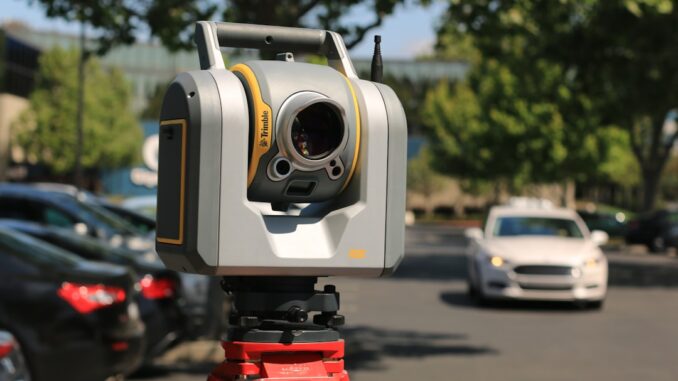
Terrestrial LiDAR systems, often referred to as Ground-based LiDAR or Static Laser Scanners, are deployed from stationary positions on tripods or fixed mounts. They are designed for capturing extremely high-resolution, detailed data of localized areas, typically within a range of a few hundred meters.
- Operational Workflow: TLS typically involves setting up the scanner at multiple vantage points to ensure complete coverage and minimize occlusions. The individual scans are then registered together, often using targets or common features, to create a single, comprehensive point cloud. This multi-scan approach is crucial for complex structures or environments.
- Key Applications:
- Building Information Modeling (BIM): Capturing as-built conditions of buildings for renovation, facility management, and architectural documentation.
- Industrial Plant Modeling: Detailed surveys of complex machinery and pipework for maintenance, modifications, and safety assessments.
- Heritage Documentation: Preserving detailed 3D models of historical sites, monuments, and artifacts for conservation, analysis, and virtual reconstruction.
- Forensic Science and Crime Scene Investigation: Documenting crime scenes with high precision, capturing spatial relationships of evidence for analysis and courtroom presentation.
- Tunnel and Mine Surveying: Inspecting structural integrity, monitoring deformation, and calculating volumes.
- Deformation Monitoring: Tracking subtle movements in structures, slopes, or geological features over time.
TLS excels in capturing intricate architectural details, precise dimensions, and structural elements that are difficult to obtain with other methods. However, its primary limitation is the limited range and the time-intensive process of setting up and moving the scanner for comprehensive area coverage.
Many thanks to our sponsor Focus 360 Energy who helped us prepare this research report.
3.3 Mobile LiDAR (MLS)
Mobile LiDAR systems are mounted on moving platforms, enabling rapid and efficient data collection over large linear or areal extents while maintaining high accuracy and density. This hybrid approach combines the speed of airborne systems with the detail of terrestrial systems for specific types of data capture.
- Vehicle-Mounted MLS: Commonly deployed on cars, vans, or trucks, these systems are used for surveying roads, highways, urban streets, and associated infrastructure (e.g., street furniture, utility poles, signage). Applications include asset management, road condition assessment, autonomous vehicle mapping, and smart city initiatives.
- Train-Mounted MLS: Specialized systems for mapping railway corridors, inspecting track geometry, tunnel clearances, and adjacent infrastructure. This is critical for rail safety and maintenance planning.
- Boat-Mounted MLS: Utilized for coastal mapping, riverine surveys, and inspecting waterways infrastructure (e.g., bridges, docks). When combined with bathymetric sensors, they can provide comprehensive above and below-water data.
- Backpack/Handheld MLS: Emerging portable systems that allow individuals to walk through complex indoor or outdoor environments, collecting dense point clouds in areas inaccessible to vehicles. Useful for indoor mapping, building walkthroughs, and confined spaces.
MLS systems integrate advanced GNSS and IMU technology with high-speed laser scanners to precisely georeference points collected at driving speeds. The main advantages are speed, efficiency, and the ability to capture complex urban environments or linear features comprehensively. Challenges include data volume, potential occlusions in very dense urban canyons, and the need for robust trajectory processing.
Many thanks to our sponsor Focus 360 Energy who helped us prepare this research report.
3.4 Spaceborne LiDAR
Spaceborne LiDAR systems operate from satellites orbiting Earth, providing global-scale measurements for understanding planetary processes. These missions offer unique capabilities for monitoring large-scale environmental changes.
- ICESat (Ice, Cloud, and land Elevation Satellite) and ICESat-2: NASA missions primarily designed to measure ice sheet elevation, sea ice thickness, and global vegetation canopy height. ICESat-2, launched in 2018, uses a single-photon LiDAR system, significantly increasing measurement density and accuracy, providing unprecedented insights into cryospheric dynamics and forest structure globally.
- GEDI (Global Ecosystem Dynamics Investigation): Also a NASA mission, mounted on the International Space Station, GEDI is specifically designed to provide high-resolution observations of forest canopy vertical structure. Its data are crucial for estimating forest biomass, carbon storage, and biodiversity across temperate and tropical forests.
Spaceborne LiDAR provides critical data for climate change research, hydrological modeling, and large-scale ecological studies, offering a consistent global dataset that complements regional airborne and terrestrial surveys.
4. Data Acquisition and Processing Workflows
The transformation of raw laser pulses into actionable spatial intelligence involves a structured and multi-stage workflow, demanding specialized software and expertise.
Many thanks to our sponsor Focus 360 Energy who helped us prepare this research report.
4.1 Data Acquisition
The initial phase involves meticulous planning and execution:
- Mission Planning: This includes defining the project area, desired point density, accuracy requirements, and selecting the appropriate LiDAR platform (airborne, terrestrial, mobile). For airborne surveys, flight lines are designed with sufficient overlap (typically 30-50%) to ensure complete coverage and enable robust data registration. For terrestrial scans, strategic scanner positions are planned.
- System Deployment and Calibration: The LiDAR system, equipped with its laser scanner, GNSS, and IMU, is deployed on the chosen platform. Regular calibration procedures are performed to ensure optimal sensor performance and data quality.
- Data Collection: As the platform traverses the predefined area, the laser scanner emits pulses, and the system records the time-of-flight, intensity of the return signal, and precise GNSS/IMU data for each pulse. This raw data is time-stamped for synchronization.
- Ground Control Points (GCPs): For rigorous accuracy assessment and refinement of the georeferencing, precisely surveyed ground control points are often established within the project area. These known coordinates serve as benchmarks against which the LiDAR data can be checked and adjusted.
Many thanks to our sponsor Focus 360 Energy who helped us prepare this research report.
4.2 Point Cloud Generation
Following data acquisition, the raw measurements are processed to create the fundamental output: the point cloud. Using the precisely recorded GNSS position of the sensor, the IMU orientation, and the time-of-flight measurements, each laser return is transformed into a three-dimensional (X, Y, Z) coordinate in a defined spatial reference system. Each point also typically carries additional attributes, such as:
- Intensity: The strength of the reflected laser pulse, offering insights into surface material properties.
- Return Number: Indicates whether it’s the first, second, or subsequent return from a single pulse, crucial for vertical stratification.
- Number of Returns: The total number of returns detected for a specific outgoing pulse.
- RGB Color (optional): If the LiDAR system is integrated with a co-registered camera, color information from the imagery can be draped onto the point cloud, enhancing visual realism and interpretability.
The result is a dense, unorganized collection of millions or even billions of discrete 3D points, representing the scanned surfaces and objects in the environment. This raw point cloud serves as the foundation for all subsequent processing steps.
Many thanks to our sponsor Focus 360 Energy who helped us prepare this research report.
4.3 Data Processing
Transforming the raw point cloud into meaningful, usable information requires a series of sophisticated processing steps:
- Trajectory Processing and Georeferencing: This initial critical step involves combining the raw GNSS and IMU data to calculate the precise 3D trajectory (position and orientation) of the LiDAR sensor at every moment of data acquisition. This trajectory is then used to georeference each individual laser point, transforming sensor-centric coordinates into a global coordinate system. Differential GNSS techniques and post-processed kinematic (PPK) or real-time kinematic (RTK) corrections are often applied here to achieve high positional accuracy.
- Point Cloud Alignment/Registration: For terrestrial and mobile LiDAR, data from multiple scan positions or passes must be accurately aligned and merged into a single, cohesive point cloud. This often involves iterative closest point (ICP) algorithms or fiducial targets.
- Filtering: The raw point cloud inevitably contains noise, outliers, and erroneous points due to atmospheric conditions, sensor errors, or highly reflective surfaces. Filtering algorithms (e.g., statistical outlier removal, median filtering, isolation forest) are applied to remove these unwanted points, improving the overall quality and accuracy of the dataset.
- Classification: This is a crucial step where points are assigned semantic labels based on their characteristics, such as height, intensity, geometric properties, and spatial context. Common classification categories include:
- Ground: Points representing the bare earth surface.
- Vegetation: Further subdivided into low, medium, and high vegetation.
- Buildings: Points constituting rooftops, walls, and architectural features.
- Water: Points representing water bodies.
- Vehicles: Cars, trucks, etc.
- Power Lines/Utility Poles: Infrastructure elements.
- Noise: Unclassified erroneous points.
Classification can be performed using rule-based algorithms (e.g., elevation thresholding, morphological filters), machine learning techniques (e.g., Support Vector Machines, Random Forests), or increasingly, deep learning models (e.g., Convolutional Neural Networks, PointNet architectures).
- Modeling and Product Generation: Once classified, the point cloud can be used to generate a variety of derivative products:
- Digital Elevation Model (DEM): A raster representation of surface elevation, including all features.
- Digital Terrain Model (DTM): A raster model representing the bare-earth surface, with vegetation and buildings removed. This is often interpolated from the classified ground points.
- Digital Surface Model (DSM): A raster model representing the elevation of the uppermost surface, including buildings, trees, and other features.
- Canopy Height Model (CHM): Derived by subtracting the DTM from the DSM, representing the height of vegetation and structures above ground. Essential for forestry.
- 3D Mesh Models and Building Models: Creating solid 3D representations of objects, such as buildings with LOD (Level of Detail) specifications.
- Contour Lines: Vector isolines representing constant elevation.
- Volumetric Calculations: Estimating volumes of stockpiles, earthworks, or aggregate materials.
Many thanks to our sponsor Focus 360 Energy who helped us prepare this research report.
4.4 Analysis and Interpretation
With the classified and modeled data, specialists can perform advanced analyses and extract meaningful information to support various applications:
- Feature Extraction: Automated or semi-automated identification and extraction of specific geographic features (e.g., building footprints, road edges, power line trajectories, individual tree crowns).
- Change Detection: By comparing LiDAR datasets captured at different times, changes in topography, vegetation cover, or urban development can be precisely quantified. This is critical for monitoring erosion, urban expansion, forest growth, or post-disaster assessment.
- Visibility Analysis: Determining lines of sight for telecommunications, urban planning, or defense applications.
- Hydrological Modeling: Deriving flow paths, catchment areas, and flood inundation models from highly accurate DTMs.
- Vegetation Structure Analysis: Quantifying parameters like canopy cover, leaf area index (LAI), biomass, and forest stand metrics.
- Volumetric Computations: Precise calculation of material volumes in mining, construction, and agriculture.
5. Applications of LiDAR Technology
LiDAR’s inherent ability to deliver precise, high-density 3D spatial data has cemented its role as an indispensable tool across an extraordinary breadth of disciplines.
Many thanks to our sponsor Focus 360 Energy who helped us prepare this research report.
5.1 Urban Planning and Development
In the realm of urban planning, LiDAR is transformative, providing the foundational geospatial data for intelligent city development:
- Infrastructure Design and Management: Detailed DTMs and DSMs are crucial for designing new roads, railways, bridges, and utilities. For existing infrastructure, LiDAR facilitates precise mapping of assets (e.g., utility poles, manholes), monitoring their condition, and planning maintenance activities. It supports the creation of comprehensive urban infrastructure inventories.
- Flood Risk Assessment and Mitigation: Highly accurate DTMs derived from LiDAR are fundamental for hydrological modeling, enabling the identification of flood-prone areas, simulation of flood inundation scenarios, and design of effective flood defenses. This is vital for urban resilience planning.
- Transportation Network Planning: LiDAR data aids in optimizing road alignments, assessing sightlines for traffic safety, and planning public transport routes. For autonomous vehicles, high-definition (HD) maps generated from mobile LiDAR are critical for navigation, localization, and obstacle detection, providing centimeter-level precision for safe operation.
- Urban Canopy and Green Infrastructure: LiDAR helps map urban trees, parks, and green spaces, assessing their impact on air quality, urban heat island effect, and stormwater management. It can quantify tree heights, canopy volumes, and species distribution to inform urban forestry initiatives.
- Solar Potential Analysis: By creating detailed 3D building models, LiDAR data can be used to analyze rooftop geometries and identify optimal locations for solar panel installations, calculating solar insolation values based on sun angles and shading from adjacent buildings.
- 3D City Models and Digital Twins: LiDAR is a primary data source for constructing realistic 3D city models, which serve as digital twins of urban environments. These models support visualization, simulation, and analysis for various urban management tasks, from view corridor studies to smart city applications like smart energy grids and waste management.
Many thanks to our sponsor Focus 360 Energy who helped us prepare this research report.
5.2 Forestry and Environmental Management
LiDAR has revolutionized forest inventory and environmental monitoring due to its ability to penetrate canopies and characterize vertical forest structure:
- Forest Inventory and Biomass Estimation: LiDAR provides precise measurements of tree height, crown diameter, canopy cover, and stand density. This data is used to derive accurate estimates of forest biomass and carbon stock, crucial for carbon accounting, sustainable forest management, and climate change mitigation strategies.
- Habitat Mapping and Biodiversity Studies: By revealing subtle topographic features and detailed vegetation structure, LiDAR aids in identifying and characterizing critical habitats. It helps understand species distribution patterns and monitor changes in biodiversity over time.
- Wildfire Risk Assessment: LiDAR-derived canopy height models and fuel load assessments are instrumental in modeling wildfire behavior, identifying high-risk areas, and planning fuel reduction strategies. It allows for detailed mapping of ladder fuels and crown fire potential.
- Hydrological and Erosion Modeling: Accurate DTMs are used to delineate watersheds, model water flow, and identify areas prone to soil erosion. This supports effective land management practices and water resource planning.
- Coastal Erosion Monitoring: Multi-temporal bathymetric and topographic LiDAR data are used to track changes in beach profiles, dune systems, and coastal morphology, providing critical information for coastal protection and management strategies.
- Glacier and Ice Sheet Monitoring: Spaceborne and airborne LiDAR systems are vital for measuring the elevation and volume changes of glaciers and ice sheets, providing key indicators of climate change impacts.
Many thanks to our sponsor Focus 360 Energy who helped us prepare this research report.
5.3 Archaeology
LiDAR has become an indispensable tool in archaeology, enabling the discovery and mapping of ancient landscapes that are often obscured by dense vegetation or subtle topographic features:
- Sub-Canopy Feature Detection: Unlike traditional aerial photography, LiDAR’s ability to penetrate forest canopies allows archaeologists to ‘see through’ vegetation and reveal hidden structures such as ancient roads, settlement patterns, defensive earthworks, and agricultural terraces that would otherwise remain undetected. Notable discoveries include extensive Mayan cities (e.g., Tikal, El Zotz) and Roman infrastructure.
- Detailed Site Documentation: For known archaeological sites, TLS provides ultra-high-resolution 3D models for detailed documentation, preservation planning, and virtual reconstruction.
- Landscape Archaeology: LiDAR aids in understanding the broader archaeological landscape, identifying relationships between settlements, resources, and communication networks over vast areas.
- Paleo-environmental Reconstruction: By mapping subtle changes in ancient river channels or geological features, LiDAR can help reconstruct past environmental conditions and human interaction with the landscape.
Many thanks to our sponsor Focus 360 Energy who helped us prepare this research report.
5.4 Infrastructure Inspection and Maintenance
LiDAR provides highly accurate and objective data for assessing the condition and integrity of critical infrastructure:
- Bridge Inspection and Monitoring: Mobile and terrestrial LiDAR systems are used to create detailed 3D models of bridges, enabling engineers to detect subtle deformations, cracks, or structural anomalies that may indicate fatigue or damage. This supports proactive maintenance and safety assessments.
- Power Line Corridor Mapping: Airborne and mobile LiDAR efficiently map power line corridors, identifying vegetation encroachment that poses wildfire risks or threatens service reliability. It also measures conductor sag and clearances, ensuring compliance with safety regulations.
- Railroad Track Geometry and Clearance Analysis: Train-mounted LiDAR systems precisely measure track geometry (e.g., gauge, cant, alignment) and ensure adequate clearances for trains in tunnels, under bridges, and along the right-of-way, crucial for safety and operational efficiency.
- Pipeline Monitoring: LiDAR can detect ground deformation or subsidence over buried pipelines, identifying potential stress points. It also aids in mapping above-ground pipeline infrastructure and associated features.
- Telecommunications Infrastructure: Mapping antenna towers, signal propagation paths, and potential obstructions.
Many thanks to our sponsor Focus 360 Energy who helped us prepare this research report.
5.5 Disaster Management and Resilience
LiDAR plays a critical role across all phases of disaster management—from preparedness and mitigation to response and recovery:
- Pre-Disaster Hazard Mapping: High-resolution DTMs are fundamental for accurate flood inundation modeling, landslide susceptibility mapping, and identifying areas vulnerable to tsunamis or storm surges. This informs risk assessments and mitigation planning.
- Post-Disaster Damage Assessment: By comparing pre- and post-disaster LiDAR datasets, responders can rapidly assess the extent and nature of damage from earthquakes (ground deformation, building collapse), floods (inundation extent, structural damage), wildfires (burned area, vegetation loss), and hurricanes (storm surge, structural damage). This quantitative assessment guides resource allocation and recovery efforts.
- Search and Rescue Operations: In areas with heavy debris or altered landscapes, LiDAR-derived maps can help locate missing infrastructure or plan access routes for emergency teams.
- Volcanic Hazard Monitoring: LiDAR can map subtle changes in volcanic terrain, identify potential lava flow paths, and monitor edifice deformation, aiding in hazard assessment and evacuation planning.
- Landslide Monitoring: Terrestrial and mobile LiDAR systems can precisely monitor slope stability and detect subtle ground movements indicating impending landslides, enabling early warning systems.
Many thanks to our sponsor Focus 360 Energy who helped us prepare this research report.
5.6 Autonomous Systems and Robotics
LiDAR is a cornerstone technology for autonomous navigation and object perception in a wide array of robotic systems:
- Self-Driving Cars: LiDAR sensors provide high-resolution, real-time 3D perception of the surrounding environment, crucial for detecting other vehicles, pedestrians, cyclists, and obstacles. The dense point clouds enable precise localization, mapping, and path planning, even in challenging lighting conditions (though fog and heavy rain can degrade performance).
- Robotics: Used in industrial robots for precise object manipulation, quality control, and collision avoidance. In mobile robotics, LiDAR enables simultaneous localization and mapping (SLAM) for indoor and outdoor navigation.
- Drones and UAVs: LiDAR-equipped drones perform autonomous inspections, precision agriculture tasks, and terrain-following flights, enhancing safety and operational efficiency.
- Logistics and Warehousing: Automated guided vehicles (AGVs) and robots in warehouses use LiDAR for navigation, inventory management, and obstacle avoidance.
Many thanks to our sponsor Focus 360 Energy who helped us prepare this research report.
5.7 Geology and Geomorphology
LiDAR has significantly enhanced the study of Earth’s surface processes and geological structures:
- Fault Mapping and Tectonic Studies: High-resolution DTMs derived from LiDAR reveal subtle topographic expressions of active fault lines, even in vegetated areas, allowing geologists to precisely map fault scarps, measure displacement, and assess seismic hazard.
- Landslide and Debris Flow Mapping: Detailed terrain models enable the identification of past landslide features, assessment of slope stability, and mapping of potential flow paths for debris flows and mudslides.
- Fluvial Geomorphology: Mapping river channels, floodplains, and terraces provides insights into river dynamics, erosion, and depositional processes.
- Volcanic and Glacial Geomorphology: Documenting volcanic landforms, lava flows, and glacial features (e.g., moraines, drumlins) for studying past and present geological processes.
- Erosion and Sedimentation Studies: Quantifying changes in topography over time allows for precise measurement of erosion rates and sediment transport, critical for soil conservation and watershed management.
6. Integration with Other Geospatial Data Sources
The true power of LiDAR data is often fully realized when integrated synergistically with other complementary geospatial datasets. This data fusion approach mitigates the limitations of individual sensors and creates a richer, more comprehensive understanding of the environment.
- LiDAR + Optical Imagery: Optical imagery (e.g., RGB, multispectral, hyperspectral) provides crucial spectral and textural information that LiDAR alone cannot capture. By co-registering LiDAR point clouds with high-resolution optical images, points can be colorized, making the 3D data more visually intuitive and enhancing feature identification. The spectral signatures from optical data help classify vegetation types, differentiate building materials, and assess land cover, complementing LiDAR’s structural information. For example, LiDAR provides the height and geometry of trees, while optical imagery can identify their species or health status.
- LiDAR + Synthetic Aperture Radar (SAR): SAR is an active microwave remote sensing technology that has the unique advantage of penetrating clouds, smoke, and even light vegetation, making it suitable for all-weather, day-and-night data acquisition. While LiDAR provides precise vertical profiles and detailed surface geometry, SAR offers information related to surface roughness, dielectric properties, and subsurface features (depending on wavelength). The integration of LiDAR’s precise height models with SAR’s all-weather capabilities is invaluable for monitoring dynamic landscapes, such as flood inundation under cloud cover or deformation in tropical forests where optical data is frequently obstructed.
- LiDAR + Thermal Imagery: Thermal infrared imagery captures heat signatures, revealing temperature variations on surfaces. Fusing this with LiDAR’s 3D geometry allows for applications such as identifying heat loss from buildings (energy efficiency assessments), detecting underground utility leaks, mapping urban heat islands in 3D, and monitoring geological activity. The thermal data adds another dimension of information about the physical state and energy dynamics of objects.
- LiDAR + Hyperspectral Data: Hyperspectral sensors capture hundreds of narrow, contiguous spectral bands, providing incredibly detailed material identification capabilities. Combining this rich spectral information with LiDAR’s precise 3D geometry enables advanced material classification, detailed vegetation species mapping, and environmental characterization (e.g., detecting specific pollutants or stress in plants). This is particularly powerful for precision agriculture, environmental monitoring, and geological mapping.
- LiDAR + Ground-Penetrating Radar (GPR): For subsurface investigations, LiDAR provides precise above-ground context, while GPR offers insights into buried utilities, archaeological features, and soil stratigraphy. This combination is essential for civil engineering, utility mapping, and archaeological prospection.
This multi-sensor integration allows for more robust classification algorithms, improved change detection, enhanced visualization, and ultimately, a more comprehensive and accurate understanding of complex spatial environments. Data fusion can occur at various levels: pixel-level (combining raw sensor data), feature-level (combining extracted features), or decision-level (combining outputs from individual sensors for a final decision).
7. Role of Artificial Intelligence in LiDAR Data Processing
The sheer volume, complexity, and unstructured nature of LiDAR point clouds make manual processing arduous and often infeasible. Artificial intelligence (AI), particularly machine learning (ML) and deep learning (DL), has emerged as a critical enabler for automating, accelerating, and enhancing the processing, analysis, and interpretation of LiDAR data.
Many thanks to our sponsor Focus 360 Energy who helped us prepare this research report.
7.1 Automated Classification and Feature Extraction
Traditional rule-based classification methods for LiDAR data often struggle with variability and complexity in real-world environments. AI algorithms offer a more robust and adaptive approach:
- Supervised Machine Learning: Techniques like Support Vector Machines (SVMs), Random Forests, and Gradient Boosting have been widely used for point cloud classification. These models learn patterns from labeled training data (e.g., points manually classified as ‘ground’, ‘building’, ‘vegetation’) and then apply these learned rules to new, unseen data. Features fed into these models typically include height above ground, intensity, normal vectors, local geometric properties (e.g., linearity, planarity, sphericity), and neighborhood statistics.
- Unsupervised Learning: Clustering algorithms such as K-means or DBSCAN can identify natural groupings within point clouds based on geometric or intensity similarities, which can be useful for initial segmentation or anomaly detection without prior labels.
Many thanks to our sponsor Focus 360 Energy who helped us prepare this research report.
7.2 Deep Learning for Semantic Segmentation
Deep learning, a subfield of ML, has particularly revolutionized LiDAR data processing. Deep neural networks, especially Convolutional Neural Networks (CNNs), are highly effective at learning intricate hierarchical features directly from raw data, overcoming the need for hand-crafted features. For point clouds, deep learning approaches can be categorized as:
- Point-Based Methods: These networks directly consume unordered point clouds. Pioneering architectures like PointNet and PointNet++ (Qi et al., 2017a, 2017b) learn local and global features directly from individual points, enabling semantic segmentation (assigning a class label to each point) and object classification. Subsequent advancements, such as RandLA-Net (Hu et al., 2020), address the scalability challenges of large point clouds by using efficient sampling and local feature aggregation.
- Voxel-Based Methods: The point cloud is converted into a regular 3D grid of voxels, which can then be processed by 3D CNNs. While this introduces quantization errors, it allows leveraging well-established CNN architectures. Sparse Convolutional Networks have mitigated the computational burden of sparse voxel grids.
- Multi-View/Projection-Based Methods: Point clouds are projected onto 2D images (e.g., range images, intensity images, bird’s-eye view) and then processed by 2D CNNs. This can be computationally efficient but may lose some 3D geometric information.
Specific Applications of AI in LiDAR:
- Automated Building Extraction: Deep learning models can accurately delineate building footprints, extract facade details, and even generate detailed 3D building models (e.g., LOD2/LOD3) automatically from LiDAR point clouds, significantly accelerating urban mapping processes (Chajaei & Bagheri, 2024).
- Vegetation Classification and Individual Tree Segmentation: AI can distinguish different vegetation types, estimate canopy parameters, and even identify and segment individual tree crowns, which is crucial for precision forestry and ecological studies.
- Power Line and Pole Detection: Deep learning excels at identifying thin, linear features like power lines and poles, critical for infrastructure monitoring and safety.
- Anomaly Detection: AI can be trained to identify unusual patterns or objects in point clouds, useful for detecting defects in infrastructure, unauthorized construction, or environmental changes.
- Real-time Processing for Autonomous Systems: Lightweight and efficient deep learning models are deployed in autonomous vehicles and robotics to process incoming LiDAR data in real-time for object detection, tracking, and collision avoidance.
- Data Augmentation and Gap Filling: AI can learn to intelligently fill gaps in LiDAR datasets or enhance resolution by inferring missing information based on surrounding data.
Many thanks to our sponsor Focus 360 Energy who helped us prepare this research report.
7.3 Challenges and Future of AI in LiDAR
Despite its immense promise, integrating AI with LiDAR still presents challenges:
- Data Annotation: Deep learning models require vast amounts of accurately labeled training data, which is time-consuming and expensive to generate for complex 3D point clouds.
- Generalization: Models trained on data from one geographic region or sensor type may not generalize well to others, requiring continuous adaptation and retraining.
- Computational Resources: Training and deploying complex deep learning models on large LiDAR datasets demand significant computational power (GPUs).
- Interpretability: Understanding ‘why’ an AI model makes certain classifications can be challenging, which is critical in safety-sensitive applications.
The future of AI in LiDAR is expected to see advancements in:
- Self-supervised and Semi-supervised Learning: Reducing the reliance on fully annotated datasets.
- Explainable AI (XAI): Developing models whose decisions are more transparent and understandable.
- Edge Computing: Deploying AI models directly on LiDAR sensors or platforms for real-time, on-device processing.
- Fusion Networks: Deep learning architectures specifically designed to fuse LiDAR data with other sensor modalities (e.g., camera imagery, radar) for enhanced perception.
8. Challenges and Future Directions
While LiDAR technology has reached a remarkable level of sophistication and applicability, its further evolution and widespread adoption are shaped by ongoing challenges and exciting future possibilities.
Many thanks to our sponsor Focus 360 Energy who helped us prepare this research report.
8.1 Current Challenges
- Data Volume and Management: LiDAR datasets are inherently massive, often comprising billions of points for even moderately sized projects. This necessitates substantial storage, high-performance computing for processing, and robust data transfer mechanisms. Managing and archiving these large datasets pose significant logistical and technical challenges.
- Cost of Acquisition and Processing: High-end LiDAR systems, particularly airborne and advanced mobile platforms, represent a significant capital investment. The costs associated with data acquisition (aircraft, specialized operators, flight hours) and the specialized software and expertise required for processing remain substantial, limiting accessibility for smaller organizations or lower-budget projects.
- Data Processing Complexity and Expertise: Transforming raw LiDAR point clouds into actionable intelligence requires highly specialized knowledge in geospatial data processing, photogrammetry, and increasingly, AI/ML. The learning curve for these tools and techniques can be steep, leading to a shortage of qualified professionals.
- Standardization and Interoperability: While formats like LAS (LiDAR ASCI Standard) exist, variations in data structures, attribute definitions, and metadata conventions among different sensors and software platforms can create interoperability issues. A lack of universal standards can hinder data sharing and integration.
- Environmental Limitations: LiDAR performance can be affected by adverse weather conditions. Heavy rain, dense fog, snow, or thick smoke can significantly attenuate the laser signal, reducing range and data quality. Very dark or highly specular surfaces can also present challenges for accurate returns.
- Occlusions and Line-of-Sight: As an optical line-of-sight technology, LiDAR cannot ‘see through’ solid objects. In dense urban environments or heavily vegetated areas, objects can obscure features, leading to gaps or occlusions in the point cloud. This often necessitates multiple scan passes or strategic placement of terrestrial scanners.
- Data Security and Privacy: The highly detailed nature of LiDAR data, particularly in urban areas, can raise privacy concerns. The ability to identify individual features, vehicles, and potentially even people (from reflective surfaces) necessitates robust data security protocols and ethical guidelines for collection and use.
Many thanks to our sponsor Focus 360 Energy who helped us prepare this research report.
8.2 Future Directions and Innovations
The LiDAR landscape is characterized by rapid innovation, driven by advancements in photonics, computing, and AI:
- Miniaturization and Cost Reduction: The development of Micro-Electro-Mechanical Systems (MEMS) mirrors and solid-state LiDAR (which uses no moving parts) is leading to significantly smaller, lighter, and more robust sensors. This miniaturization is driving down costs and enabling integration into a wider range of platforms, from consumer electronics (smartphones) to autonomous vehicles and small drones. Reduced costs will democratize access to high-quality LiDAR data.
- Single-Photon and Geiger-Mode LiDAR: These advanced technologies are capable of detecting individual photons, offering vastly improved sensitivity and the ability to operate at much higher altitudes or with significantly lower laser power. This enhances performance in challenging conditions, allows for faster data acquisition, and pushes the boundaries of spaceborne LiDAR applications (e.g., ICESat-2).
- Multi-Wavelength and Hyperspectral LiDAR: Future systems will increasingly integrate multiple laser wavelengths or even hyperspectral capabilities into the LiDAR sensor itself. This will provide not only 3D geometry but also rich spectral information, allowing for sophisticated material identification, refined vegetation analysis, and advanced environmental monitoring directly from the LiDAR scan.
- Real-time Processing and Edge Computing: As autonomous systems become more prevalent, the demand for real-time, on-board processing of LiDAR data is growing. Advancements in specialized hardware (e.g., FPGAs, ASICs) and efficient AI algorithms will enable LiDAR data to be processed and interpreted at the ‘edge’ (on the sensor or platform) with minimal latency.
- Cloud-Based Processing and Analytics: The trend towards cloud computing will continue to facilitate the processing, storage, and sharing of massive LiDAR datasets. Cloud platforms will offer scalable computing resources and host advanced AI/ML algorithms, making sophisticated analysis more accessible to a broader user base through Software-as-a-Service (SaaS) models.
- Enhanced Integration with Other Sensors: The fusion of LiDAR with other sensor modalities (e.g., high-resolution cameras, thermal sensors, radar, ultrasonic sensors) will become even more seamless and sophisticated, enabled by advanced data fusion algorithms and AI. This will create truly holistic environmental perception systems.
- Augmented Reality (AR) and Virtual Reality (VR) Integration: LiDAR’s ability to create highly accurate 3D models makes it ideal for AR/VR applications. This will enable immersive visualization of real-world environments for planning, design, training, and remote operations.
- Ethical AI and Data Governance: As AI plays a larger role in interpreting LiDAR data, ethical considerations surrounding bias in algorithms, data privacy, and the responsible use of highly detailed spatial information will become paramount, leading to the development of robust governance frameworks.
- Global Monitoring Initiatives: Spaceborne LiDAR missions will continue to expand, providing consistent, global datasets for long-term monitoring of climate change impacts, ecosystem dynamics, and large-scale geological processes, contributing to global scientific understanding and policy formulation.
9. Conclusion
LiDAR technology has profoundly transformed the field of remote sensing, transitioning from a specialized niche to an indispensable tool for generating highly precise and detailed three-dimensional spatial data. Its foundational principle of time-of-flight measurement, coupled with sophisticated sensor integration (GNSS and IMU), enables the creation of dense point clouds that offer an unprecedented resolution of the Earth’s surface and objects upon it. The versatility of LiDAR is evident in its diverse system types—airborne for expansive regional coverage, terrestrial for intricate site-specific detail, mobile for efficient corridor mapping, and spaceborne for global environmental monitoring—each tailored to specific application requirements.
From the meticulous planning of urban infrastructure and the sustainable management of vast forest ecosystems to the silent revelation of ancient civilizations and the critical assessment of post-disaster landscapes, LiDAR applications are as broad as they are impactful. The synergistic integration of LiDAR data with complementary geospatial sources, such as optical imagery, SAR, and thermal data, further amplifies its analytical power, yielding richer and more reliable insights. Crucially, the advent and rapid evolution of artificial intelligence, particularly deep learning, are proving transformative, automating complex processing tasks, enhancing classification accuracy, and accelerating the extraction of meaningful information from colossal LiDAR datasets, thereby pushing the boundaries of what is possible in spatial analytics.
While challenges persist, notably concerning data volume management, acquisition costs, and processing complexities, the trajectory of LiDAR innovation points towards a future characterized by greater accessibility, enhanced performance, and broader integration. Miniaturization, solid-state designs, multi-wavelength capabilities, and advancements in real-time processing and cloud-based platforms are poised to further democratize and expand LiDAR’s utility. As technology continues its relentless march, LiDAR is not merely a tool for measurement but a cornerstone for informed decision-making, fostering sustainable development, enhancing public safety, and deepening our understanding of the complex interactions within our dynamic planet. Its continued evolution will undoubtedly play an increasingly vital role in shaping the future of geospatial intelligence and our interaction with the built and natural environments.
References
- Afroosheh, S., & Askari, M. (2024). Geospatial Data Fusion: Combining LiDAR, SAR, and Optical Imagery with AI for Enhanced Urban Mapping. arXiv preprint arXiv:2412.18994.
- Chajaei, F., & Bagheri, H. (2024). Machine Learning Framework for High-Resolution Air Temperature Downscaling Using LiDAR-Derived Urban Morphological Features. arXiv preprint arXiv:2409.02120.
- Fugro. (2025). Lidar Applications in the Modern World. Retrieved from https://www.fugro.com/news/long-reads/2025/lidar-applications-in-the-modern-world-fugro-longread
- Hu, Q., Yang, B., Cao, S., Jiang, X., Cheng, C., & Li, L. (2020). RandLA-Net: Efficient semantic segmentation of large-scale point clouds. In Proceedings of the IEEE/CVF conference on computer vision and pattern recognition (pp. 11105-11114).
- Map Library. (2025). 7 Ideas for Exploring LiDAR Data Applications That Unlock Insights. Retrieved from https://www.maplibrary.org/11400/7-ideas-for-exploring-lidar-data-applications/
- Qi, C. R., Hao, S., Mo, K., & Guibas, L. J. (2017a). Pointnet: Deep learning on point sets for 3d classification and segmentation. In Proceedings of the IEEE conference on computer vision and pattern recognition (pp. 652-660).
- Qi, C. R., Yi, L., Su, H., & Guibas, L. J. (2017b). Pointnet++: Deep hierarchical feature learning on point sets in a metric space. In Advances in neural information processing systems (Vol. 30).
- Spatial Post. (2023). 11+ Application of LiDAR Technology – Transforming Industries with Precision. Retrieved from https://www.spatialpost.com/application-of-lidar-technology/
- Wikipedia. (2025). LiDAR. Retrieved from https://en.wikipedia.org/wiki/Lidar
- Wikipedia. (2025). Geological Structure Measurement by LiDAR. Retrieved from https://en.wikipedia.org/wiki/Geological_structure_measurement_by_LiDAR
- Wikipedia. (2025). Bridger Photonics. Retrieved from https://en.wikipedia.org/wiki/Bridger_Photonic’s
Be the first to comment