

Unlocking Efficiency: A Deep Dive into Energy Retrofits and Smart Optimization for Existing Buildings
Hey there! Let’s chat about something crucial for every building owner and manager today: making our existing structures more energy efficient. It’s not just a nice-to-have anymore; it’s absolutely essential. Think about it, we’re facing ever-rising operational costs, increasing pressure to reduce our carbon footprints, and, let’s be honest, tenants and employees are expecting smarter, healthier, more comfortable spaces. By strategically implementing deep energy retrofits and leveraging cutting-edge advanced modeling techniques, we can achieve some truly remarkable improvements in a building’s energy performance and, just as importantly, in the comfort and well-being of its occupants. It’s a win-win, really.
Deep Energy Retrofits: Beyond a Quick Fix – A Comprehensive Overhaul
When we talk about a deep energy retrofit (DER), we’re not just swapping out a few lightbulbs, though that’s a good start, of course. No, a DER is a comprehensive analysis and construction process, a real strategic overhaul, aimed at slashing on-site energy use by a staggering 50% or even more. The best part? We’re achieving these ambitious goals using technologies, materials, and construction practices that are already available, proven, and ready for deployment (en.wikipedia.org).
Successful low-energy building design hinges on careful planning. Focus360 Energy can help.
Unlike those conventional, piecemeal energy retrofits that might tackle one isolated system, a DER embraces the entire building as an interconnected ecosystem. It’s about looking at everything: the insulation that blankets the structure, the windows that either welcome or repel the sun’s gaze, the intricate network of HVAC systems, and even how we integrate renewable energy. This isn’t just about saving a buck on the utility bill; this holistic approach significantly enhances energy efficiency, sure, but it also dramatically improves indoor air quality, boosts occupant comfort, and can even extend the useful life of the building itself. You’re essentially future-proofing your asset, making it more resilient and attractive in a competitive market. Imagine the feeling of stepping into a building where the air feels consistently fresh, the temperature is perfectly balanced, and you know it’s running like a finely tuned machine – that’s the DER promise.
The Transformative Power of a DER
Many see DERs as a significant upfront investment, and truthfully, they often are. But consider the long-term ripple effects. We’re talking about substantial reductions in your carbon emissions, which aligns beautifully with corporate sustainability goals and helps you meet evolving regulatory requirements. Then there’s the financial upside: lower operating expenses year after year, increased property value, and a stronger market position. It’s like putting premium fuel into a high-performance car; it just runs better, lasts longer, and commands more respect.
From a human perspective, an optimized building means fewer complaints about drafts, stuffy air, or uneven temperatures. That translates directly into higher tenant satisfaction, better employee productivity, and improved health outcomes. Who wouldn’t want to work in a comfortable, healthy environment? It becomes a powerful differentiator in attracting and retaining top talent or high-value tenants, which, let’s be honest, is a big deal in today’s market. So, while the initial dive might feel deep, the rewards really do justify the effort.
Charting the Course: Implementing Deep Energy Retrofits
Embarking on a DER journey can seem daunting, but by breaking it down into clear, actionable steps, you’ll find it’s a manageable, albeit thorough, process. It’s like planning a complex expedition; you need a map, good gear, and a solid plan.
1. The Indispensable Comprehensive Energy Audit
This is where it all begins, truly. Before you even think about swinging a hammer or signing a contract, you absolutely must conduct a thorough, comprehensive energy audit. This isn’t just a quick walk-through; it’s a deep dive into your building’s energy DNA to pinpoint exactly where you’re losing energy and where the biggest opportunities for savings lie. Think of it as a detailed health check-up for your building.
What does a ‘thorough’ audit entail? It typically involves a multi-stage process, often escalating from a Level I (walk-through), which provides a preliminary assessment, to a Level II (energy survey and analysis), which includes detailed energy calculations and financial analysis of proposed measures, and sometimes even to a Level III (investment-grade audit). The Level III is exhaustive, involving extensive data collection, sub-metering, and sophisticated simulations, often leading to guaranteed savings proposals from energy service companies (ESCOs).
During this phase, expert auditors will meticulously evaluate every significant aspect of your building: the integrity of its envelope (walls, roof, foundation, windows), the efficiency and condition of your HVAC systems, your lighting infrastructure, and even your plug loads and water heating. They’ll use an array of diagnostic tools, too. We’re talking about thermographic cameras that can literally ‘see’ heat loss through walls and windows, blower door tests to quantify air leakage, and smart metering and data loggers to capture granular, real-time energy consumption patterns. This data then forms your baseline, a crucial benchmark against which you’ll measure future improvements.
It’s also vital to engage experienced, certified energy auditors or reputable engineering firms for this stage. Their expertise ensures no stone is left unturned, and their recommendations are grounded in sound engineering principles and economic viability. They’ll help you understand the potential return on investment (ROI) and the payback period for each recommended intervention, which is essential for making informed financial decisions.
2. Bolstering the Building Envelope: Your First Line of Defense
Once you know where your energy vulnerabilities are, the building envelope often emerges as a prime target. Enhancing this ‘skin’ of your building is fundamental to minimizing unwanted heat loss in winter and heat gain in summer. It’s like putting a high-performance jacket on your entire structure.
Insulation, insulation, insulation! This is non-negotiable. Upgrading or adding insulation to walls, attics, crawl spaces, and foundations can dramatically reduce thermal transfer. You might consider spray foam for superior air sealing and R-value, blown-in cellulose or fiberglass for attics and wall cavities, or rigid insulation boards for exterior applications. The goal is to achieve optimal R-values, preventing your conditioned air from simply leaking away or the outside elements from seeping in. My own home, an old brick rowhouse, used to feel like a sieve in winter. We added spray foam to the attic, and it made an unbelievable difference, the upstairs bedrooms went from freezing to comfortably warm.
Air sealing goes hand-in-hand with insulation. All the insulation in the world won’t matter if you have countless small cracks and gaps letting air sneak in and out. Common culprits include penetrations for plumbing and electrical, poorly sealed ductwork, and gaps around window and door frames. A skilled team will meticulously seal these with caulking, weatherstripping, and expanding foams. It’s often one of the lowest-cost, highest-impact measures you can take.
Then there are the windows. Old, single-pane windows are notorious energy hogs. Upgrading to energy-efficient models, typically double or triple-glazed units with low-E (low-emissivity) coatings, can significantly improve thermal performance. These coatings reflect radiant heat, keeping it inside during winter and outside during summer. Look for low U-factors (indicating better insulation) and appropriate Solar Heat Gain Coefficients (SHGC) for your climate zone. You might even consider external shading devices or smart dynamic glass that adjusts its tint.
Don’t forget the roof! It’s a massive surface exposed to the elements. Upgrading roof insulation, or installing a ‘cool roof’ with highly reflective materials, can drastically reduce cooling loads. Even a green roof, with its layer of vegetation, offers insulation benefits and reduces urban heat island effect, which is pretty cool if you ask me.
3. Modernizing HVAC Systems: The Heartbeat of Your Building
Your heating, ventilation, and air conditioning (HVAC) systems are often the biggest energy consumers in any building. Swapping out outdated, inefficient units for modern, high-efficiency models is usually a top priority in a DER. But it’s not just about replacing like-for-like; it’s about smart modernization.
Consider technologies like variable refrigerant flow (VRF) systems or ground-source heat pumps. VRF systems offer incredible zoning capabilities and precise temperature control, making them perfect for buildings with diverse occupancy needs. Ground-source heat pumps, while having a higher upfront cost, tap into the stable temperatures of the earth, providing extremely efficient heating and cooling with very low operating costs. Dedicated Outdoor Air Systems (DOAS), often paired with VRF, can handle ventilation independently, improving indoor air quality without over-conditioning the entire space.
And what about those controls? This is where true optimization happens. Modern Direct Digital Control (DDC) systems and sophisticated Building Management Systems (BMS) allow for granular control over every aspect of your HVAC. We’re talking about scheduling based on occupancy, adjusting fan speeds dynamically, and integrating with weather forecasts. Regular, preventative maintenance, informed by these smart controls, keeps everything running at peak efficiency, preventing costly breakdowns and maintaining optimal performance. It’s a bit like having a skilled orchestra conductor ensuring every instrument is playing in harmony.
Let’s not overlook ventilation. Energy recovery ventilators (ERVs) and heat recovery ventilators (HRVs) capture energy from exhaust air to pre-condition incoming fresh air, drastically reducing the energy needed for ventilation. Coupled with demand-controlled ventilation (DCV), which adjusts outdoor air intake based on CO2 sensors, you only bring in as much fresh air as needed, saving considerable energy.
4. Harnessing the Sun and Earth: Integrating Renewable Energy Sources
Once you’ve made your building as lean as possible through efficiency upgrades, the next logical step is to feed it with clean, renewable energy. This significantly reduces reliance on fossil fuels, slashes operational costs, and cements your building’s green credentials. It’s about taking energy independence into your own hands.
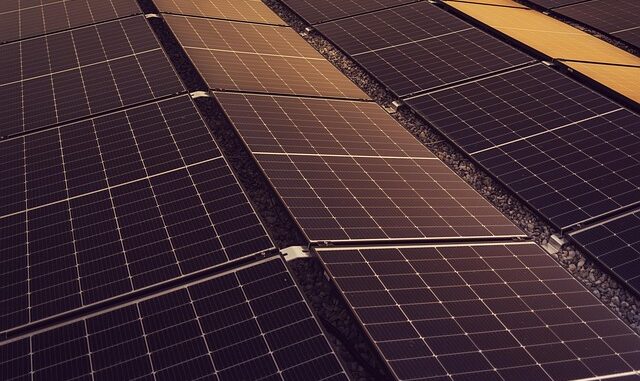
Solar photovoltaic (PV) panels are, of course, the most common and recognizable option. Rooftop installations are prevalent, but increasingly, we’re seeing façade-integrated PV or even community solar projects where your building can subscribe to off-site solar generation. Pair these with battery storage systems, and you can store excess energy generated during the day for use during peak demand hours or at night, further increasing your energy independence and resilience. Think of it, capturing the sun’s power, storing it, and then using it when you need it most. Pretty elegant, isn’t it?
Beyond electricity generation, solar thermal systems can efficiently heat water for domestic use or even supplement space heating, a often overlooked but highly effective application. And for serious heating and cooling, geothermal systems, as mentioned earlier, leverage the stable underground temperatures, offering remarkable efficiency and a truly renewable source. While initial installation can be significant, the long-term savings and environmental benefits are compelling.
It’s also worth investigating local and national incentives for renewable energy integration. Many governments offer tax credits, grants, or net metering programs, which can make the financial case for renewables even stronger. Understanding the regulatory landscape is key here.
5. Monitor, Adjust, Thrive: Continuous Optimization and Smart Building Tech
Implementing all these upgrades is fantastic, but the journey doesn’t end there. To truly maximize your investment and maintain peak performance, you need to continuously monitor and optimize your building’s energy usage. This is where smart building technologies really shine, transforming your building from a static structure into a dynamic, responsive entity.
Deploying a network of IoT sensors throughout your building is crucial. These sensors can track everything: temperature, humidity, CO2 levels, light levels, and, critically, occupancy. Imagine knowing which areas are currently in use and adjusting lighting and HVAC accordingly. Occupancy sensors and automated lighting controls ensure lights are only on when and where needed. Predictive maintenance algorithms, fed by this constant stream of data, can flag potential equipment issues before they lead to costly breakdowns, saving both energy and maintenance dollars. It’s like having a dedicated team constantly fine-tuning your building’s performance, minute by minute.
Moreover, these systems can integrate with your BMS to enable predictive control strategies. Instead of just reacting to current conditions, the system can use weather forecasts, occupancy schedules, and historical data to anticipate needs and pre-condition spaces, leading to smoother operation and greater efficiency. This approach moves beyond simple automation to truly intelligent management.
Establishing clear performance indicators and regularly reviewing detailed energy dashboards becomes part of the ongoing operational routine. This continuous commissioning approach ensures that your building continues to perform optimally, adapting to changes in weather, occupancy, and even utility rates. It’s an iterative process, a cycle of measure, analyze, adjust, repeat.
Advanced Modeling Techniques: The Crystal Ball for Energy Optimization
Even with the best hardware, getting to the absolute peak of energy efficiency in existing buildings often requires a sophisticated brain behind the brawn. That’s where advanced modeling techniques come into play. Incorporating approaches like end-to-end deep meta modeling can elevate energy efficiency to a whole new level, moving beyond static predictions to dynamic, real-time optimization (arxiv.org).
Think of it this way: traditional building energy models are incredibly useful, but they often rely on simplified assumptions and struggle to adapt to the complex, ever-changing real-world conditions of an occupied building. People come and go, weather patterns shift, equipment ages – these are all variables that traditional models find hard to fully account for. Deep meta modeling, however, steps in to fill that gap. This approach involves creating a ‘metamodel’ – essentially a model of a model – based on powerful machine learning algorithms. These algorithms are trained on extensive datasets, allowing them to learn and accurately predict complex building energy behavior with remarkable precision.
By then calibrating this metamodel with real-time sensor data from your building, managers gain an incredibly powerful tool. They can predict, with impressive accuracy, how different operational strategies will impact energy consumption, thermal comfort, and even indoor air quality. This isn’t just about making better guesses; it’s about making data-driven decisions that actively optimize energy consumption while simultaneously ensuring occupants remain comfortable and healthy. It’s like having a highly intelligent co-pilot constantly analyzing thousands of data points and recommending the most efficient flight path.
The Edge of Machine Learning in Building Performance
Why is machine learning so potent here? Because buildings are incredibly complex dynamic systems. Factors like occupancy, external temperature, solar radiation, equipment schedules, and even the thermal mass of the building itself interact in non-linear ways. Machine learning algorithms, particularly deep learning networks, are exceptionally good at identifying these intricate relationships and patterns that would be invisible to human operators or simpler models. They learn from the building’s historical performance and adapt as conditions change, effectively making your building smarter and more responsive over time. This adaptive capability is what truly sets it apart.
Putting Intelligence to Work: Implementing Deep Meta Modeling
Integrating deep meta modeling into your building operations isn’t an overnight task, but the strategic advantages it offers are significant. It’s a journey into truly intelligent building management.
1. Developing Your Metamodel: Building the Brain
The first step involves creating the core machine learning model itself. This isn’t trivial. You’ll need a comprehensive dataset that captures the nuances of your building’s operation and environment. We’re talking about years of historical energy consumption data, highly granular weather data for your specific location, occupancy patterns, operational schedules, and perhaps even maintenance logs. The richer and more diverse your data, the more robust and accurate your model will be. Imagine trying to teach a child to recognize faces; the more varied faces they see, the better they become.
For the model itself, you might employ sophisticated architectures like recurrent neural networks (RNNs) or Long Short-Term Memory (LSTM) networks. These are particularly adept at processing sequential data, which is precisely what building operational data is – a time series of energy use, temperature, and other variables. The process involves careful feature engineering – selecting and transforming raw data into meaningful inputs for the model – and then rigorous training and validation to ensure the model accurately captures the building’s energy dynamics under various scenarios.
2. Calibrating the Model: Bridging the Gap to Reality
Once you’ve developed a preliminary metamodel, the next critical phase is calibration. This is where you connect your theoretical model to the living, breathing reality of your building. Real-time sensor data from your BMS, weather stations, and other IoT devices becomes the lifeblood of this step. The model’s parameters are continuously adjusted and refined based on this live data, ensuring its predictions remain incredibly accurate, reflecting the building’s current state and operational quirks. It’s a dynamic feedback loop, where the model constantly learns and self-corrects.
This continuous calibration is vital because buildings aren’t static. Equipment performance degrades, occupancy patterns shift seasonally, and even minor structural changes can subtly alter energy flows. Techniques like Bayesian inference or Kalman filters can be used to effectively integrate new sensor data and update the model’s understanding of the building’s behavior over time, ensuring its continued relevance and predictive power (arxiv.org).
3. Optimizing Energy Usage: Orchestrating Performance
With a well-developed and calibrated metamodel in hand, you’ve essentially built a powerful simulation engine that can predict the future energy performance of your building under various conditions and control strategies. Now, the real magic happens: optimization. This involves applying multi-objective optimization algorithms to find the sweet spot, the optimal balance between potentially conflicting goals. Of course, you want to minimize energy consumption and cost, but you also need to maintain excellent thermal comfort, ensure healthy indoor air quality, and keep equipment wear and tear in check. It’s a delicate dance, but the algorithms excel at it.
These algorithms, such as genetic algorithms or particle swarm optimization, can explore thousands, even millions, of possible operational settings for your HVAC systems, lighting, and other equipment. They ‘test’ these scenarios virtually against your metamodel and identify the set of parameters that best achieves your defined objectives. The optimal control signals are then sent directly to your BMS, allowing the building to proactively adjust its systems in real-time. Imagine a scenario where a heatwave is predicted; the system could subtly pre-cool the building during off-peak hours, reducing the load during the hottest, most expensive times of the day, all while ensuring comfort.
This isn’t just about saving energy; it’s about elevating your building to truly optimal performance, creating a highly responsive, intelligent environment that benefits everyone who uses it.
A Beacon of Green: The Empire State Building’s Transformative Retrofit
Sometimes, seeing is believing, right? The story of the Empire State Building’s green retrofit is a fantastic example of a DER in action, proving that even iconic, historic structures can be radically transformed. Starting in 2010, this monumental project, costing over $31 million, wasn’t just about a facelift; it was a deep commitment to slashing energy consumption and operational costs in a massive, beloved landmark (time.com).
The scope of work was truly comprehensive. They didn’t just tinker around the edges. Key upgrades included a complete chiller plant reconstruction, installing modern, highly efficient chillers that drastically reduced cooling energy needs. The building’s 6,514 windows, a significant source of heat gain and loss, were expertly refurbished on-site by applying an insulating film and gas-filling the panes. This innovative approach saved millions compared to full window replacement while achieving similar thermal performance improvements. Additionally, radiator insulation was added, and hundreds of custom-designed secondary thermal panels were installed behind the radiators, further preventing heat from escaping through the exterior walls. And even the elevators got a green upgrade, replacing conventional motors with energy-efficient models that regenerate power as they descend.
The results were nothing short of spectacular. These thoughtful, integrated changes led to an impressive 40% reduction in energy consumption, translating into more than $4 million in annual savings. Beyond the financial and environmental benefits, the retrofit significantly improved occupant comfort, creating a more consistent indoor climate. This wasn’t just good for the planet and the bottom line; it also made the building a more desirable place to work, attracting high-value tenants eager to associate with a symbol of sustainability and efficiency. It really set a global benchmark for what’s possible in retrofitting existing commercial real estate, proving that old buildings can absolutely learn new tricks and lead the way.
The Path Forward: Embracing a Sustainable Future
Improving energy efficiency in existing buildings truly is a multifaceted endeavor, calling for a thoughtful combination of those impactful deep energy retrofits and the intelligent insights provided by advanced modeling techniques. It’s a journey, not a destination, requiring vision, expertise, and a willingness to embrace innovation.
By adopting this comprehensive approach, building owners aren’t just achieving substantial energy savings, which is fantastic on its own. They’re also dramatically improving occupant comfort, boosting property value, enhancing brand reputation, and making a tangible, meaningful contribution to environmental sustainability. This isn’t just about compliance; it’s about leading the charge towards a greener, more resilient built environment. So, what steps will you take to transform your building into a high-performing, future-ready asset? The opportunity, and the necessity, have never been clearer.
Be the first to comment