
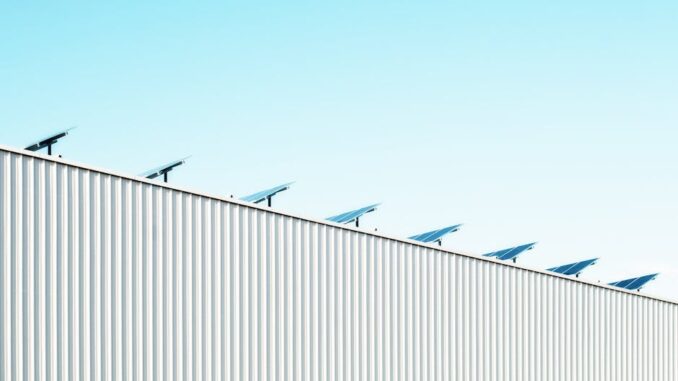

Solar Integration: The Blueprint for Modern, Sustainable Construction
In today’s rapidly evolving construction landscape, it’s becoming crystal clear that the future isn’t just about erecting impressive structures; it’s about building them intelligently, sustainably, and with an eye firmly on the planet. Architects and developers are, more than ever, recognizing the profound importance of weaving solar panels into the very fabric of new buildings. This isn’t just a trendy add-on; it’s a proactive, strategic move that doesn’t merely boost energy efficiency, it aligns perfectly with critical global sustainability goals, and, frankly, it just makes good business sense. Forget thinking of solar as an optional extra, it’s fast becoming a foundational element. We’re talking about a shift from ‘should we?’ to ‘how can we do this best?’
So, let’s roll up our sleeves and explore the multifaceted considerations for effectively, and elegantly, incorporating solar panels into new constructions. From the initial pencil strokes on a design brief to the hum of a fully operational system, every step matters. Because, truly, the sun isn’t just a light source anymore, it’s our most powerful, cleanest energy utility, just waiting for us to tap into it.
Successful low-energy building design hinges on careful planning. Focus360 Energy can help.
Deep Dive into Design: Laying the Foundation for Solar Success
When you’re planning a new building, approaching it with solar energy in mind from day one is absolutely crucial. Seriously, it’s not something you bolt on at the end. Optimal roof orientation, structural considerations, and even the aesthetic integration can dramatically enhance how your solar panels perform, and, ultimately, how much energy and money your building saves. It’s about thinking ahead, anticipating the sun’s journey across the sky, and designing your structure to capture as much of that glorious energy as possible.
Site Analysis and Orientation: Catching Every Ray
Before you even think about panel types, you’ve got to understand your site. Seriously, it’s like real estate, location, location, location. Understanding the sun’s path throughout the year – its angles at different seasons, the longest days, the shortest ones – is foundational. Tools like advanced solar modeling software, such as Helioscope or PVsyst, aren’t just fancy gadgets; they’re indispensable. They allow you to simulate sunlight exposure, predict shading patterns from existing or future structures, and pinpoint the ‘sweet spots’ on your roof or facade for maximum energy harvest.
For most northern hemisphere locations, a south-facing roof slope, ideally at an angle roughly equivalent to your latitude, offers the best year-round performance. But it’s not always that simple, is it? You might have obstructions—a towering adjacent building, a majestic old oak tree, or even plans for a future expansion that could cast long shadows. These analyses are paramount for avoiding costly mistakes and ensuring your investment truly pays off. You don’t want to install an array only to find a shadow creeping over a third of it for half the day, do you?
Structural Integrity: Building to Bear the Burden
Now, let’s talk structure. Solar panels, while increasingly lightweight, still add a significant load to a roof. We’re talking about the weight of the panels themselves, the racking systems that hold them securely, and then, crucially, the potential for heavy snow loads in winter or the incredible uplift forces of high winds. This isn’t just about safety, it’s about longevity and preventing costly repairs down the line. Involving a structural engineer early in the design process isn’t just a good idea, it’s non-negotiable.
Different roof types present unique challenges and opportunities. A flat roof offers flexibility in panel orientation and angle but often requires ballast or robust anchoring to resist wind. Pitched roofs might already offer a decent angle, simplifying installation, but the existing structure must be able to handle the added stress. Materials matter too, whether it’s a sturdy concrete deck, a lightweight metal roof, or traditional asphalt shingles, each has implications for how panels are mounted and secured. And, hey, don’t forget about maintenance access; you’ll want to design pathways for cleaning and inspections without damaging the system or putting personnel at risk.
Aesthetics and Integration: Seamlessly Blending Form and Function
Gone are the days when solar panels looked like clunky, utilitarian additions. Today, aesthetic integration is a huge selling point, especially for architects who view the building as a holistic piece of art. This is where Building-Integrated Photovoltaics (BIPV) truly shine. Imagine roof tiles that are solar panels, not just covered by them. Or facades clad in sleek, dark PV panels that blend seamlessly with the building’s envelope, turning an otherwise passive surface into an active energy generator. We’re even seeing transparent or semi-transparent PV glass used in windows and skylights, allowing natural light in while simultaneously generating electricity.
BIPV is a real game-changer because it allows architects to treat solar as an integral design element, not an afterthought. It’s about designing buildings that are beautiful and powerful. Consider the iconic Solar Umbrella House in Venice, California. Originally a modest bungalow, it was transformed into a stunning example of active and passive solar design. The architects didn’t just add panels; they conceptualized the entire structure as a ‘solar umbrella,’ shading the main house while generating all its power. That house, my friends, largely functions independently of the electrical grid, a testament to what’s possible when design and energy objectives converge from the start. It’s truly inspiring, isn’t it, to see how thoughtful design can totally redefine a building’s relationship with its environment.
Choosing Your Powerhouse: A Spectrum of Solar Technologies
Once the design foundation is solid, selecting the right solar technology becomes vital. The industry is constantly innovating, offering an array of options each with its own advantages and ideal applications. It’s not a one-size-fits-all scenario, and frankly, it shouldn’t be. Understanding the nuances will help you make the smartest investment for your project.
Monocrystalline vs. Polycrystalline: The Workhorses of PV
These are the most common types of silicon-based photovoltaic panels you’ll encounter. Monocrystalline panels, characterized by their uniform dark appearance, are generally more efficient, converting more sunlight into electricity per square foot. This makes them ideal for projects where space is at a premium, as they can generate more power from a smaller footprint. On the flip side, they tend to be a bit more expensive to manufacture.
Polycrystalline panels, often with a slightly speckled blue hue, are generally less efficient but also less costly to produce. They’re a solid, cost-effective choice for projects where roof space isn’t a constraint and budget is a primary driver. Both are robust, reliable technologies, but understanding your project’s specific needs – efficiency targets, budget, and available space – will guide your choice between these two proven performers.
Thin-Film Solar: Flexibility and Niche Applications
Beyond silicon, we have thin-film solar cells, which utilize various materials like amorphous silicon, Cadmium Telluride (CdTe), or Copper Indium Gallium Selenide (CIGS). Their main advantage? Flexibility, light weight, and often better performance in low-light conditions. These characteristics make them perfect for less conventional applications – imagine curved surfaces, glass facades, or structures where weight is a critical factor. Think about a tension fabric roof, for instance; a traditional rigid panel array just wouldn’t work there.
The trade-off, however, is generally lower efficiency compared to their crystalline silicon cousins, meaning you’d need a larger surface area to generate the same amount of power. But for niche applications, or when aesthetics demand a more subtle integration, thin-film can be an excellent, even superior, choice. It’s all about matching the tech to the specific architectural vision, isn’t it?
Emerging Innovations: Pushing the Boundaries of Efficiency
The solar industry isn’t sitting still; it’s a hotbed of innovation. Two technologies are particularly exciting right now:
-
Bifacial Panels: These ingenious panels can capture sunlight from both sides. The front absorbs direct sunlight, just like traditional panels, but the rear side collects reflected light – bounced off a light-colored roof, the ground, or even snow. This ‘albedo effect’ can lead to a 10% to 20% increase in energy yield compared to traditional mono-facial panels, making them a remarkably financially sound investment, especially in environments with high reflectivity. Imagine arrays over a white TPO roof or a gravel surface; that’s where bifacial really shines.
-
Perovskite Solar Cells: Often hailed as the ‘next big thing,’ perovskites boast incredibly high efficiencies in laboratory settings, rivaling and even surpassing silicon. They also offer the potential for lower manufacturing costs and flexibility. While still largely in the R&D phase for large-scale deployment, their potential is enormous. Challenges remain, primarily around long-term stability and some material toxicity concerns, but the progress is breathtaking. Keep your eyes on this space, it’s going to be transformative.
And while we’re talking energy, let’s not forget about Solar Thermal systems. These aren’t for electricity generation, but they harness the sun’s energy to heat water or space. For buildings with significant hot water demand, a solar thermal array can drastically reduce reliance on conventional water heaters, making it an equally valuable component of a comprehensive energy-efficiency strategy. Different technology, same sun, different output, but both contribute to a lower energy footprint.
Inverters and Optimizers: The Brains Behind the Power
Panels are just one part of the equation. The direct current (DC) electricity they generate needs to be converted into alternating current (AC) for use in your building and the grid. That’s the job of the inverter. You’ve got options: string inverters manage multiple panels in a ‘string,’ while micro-inverters convert DC to AC at each individual panel. The latter can significantly improve system performance by mitigating shading issues – if one panel is shaded, it doesn’t drag down the output of the entire string.
Then there are power optimizers, which are installed on each panel (like micro-inverters) but work in conjunction with a central string inverter. They condition the DC power, ensuring each panel operates at its maximum potential before sending it to the central inverter. These technologies are absolutely crucial for maximizing your system’s output and providing granular monitoring capabilities, allowing you to track performance and quickly identify any issues. Don’t underestimate their importance, they’re the brains that make your panels truly smart.
Navigating the Labyrinth: Regulations, Incentives, and Financial Sense
So, you’ve got a brilliant design and you’ve picked your tech. Now comes the nitty-gritty: the paperwork, the permits, and the financial acrobatics. Navigating the regulatory landscape and understanding the financial incentives available can feel like a labyrinth, but it’s a crucial path to tread. Trust me, getting this right can make or break a project’s viability.
Local, State, and National Regulations: The Compliance Maze
Every municipality, state, and even national body seems to have its own set of rules, codes, and permitting processes for solar installations. We’re talking about building codes that dictate everything from fire setbacks (clearances around solar arrays for firefighter access) to structural requirements and electrical standards. You’ll need permits for construction, electrical work, and often a separate permit for the solar installation itself. It’s a lot, and it definitely requires expert guidance.
Then there are the utility interconnection agreements. You’re connecting a power-generating asset to their grid, so they want to ensure it’s safe and won’t disrupt their system. This process can sometimes be surprisingly complex and time-consuming, varying wildly from one utility provider to another. Furthermore, understanding your local net metering policies is paramount. Net metering allows you to send excess electricity generated by your panels back to the grid, often receiving credits on your electricity bill. These policies vary significantly by region and can drastically impact your project’s economic viability. For instance, in a city like New York, solar integration has truly become the norm. Here, developers and architects collaborate closely from the project’s inception, driven by robust local mandates, progressive building codes, and significant incentives that make solar not just an option, but often a necessary component for achieving their ambitious sustainability requirements and even getting projects approved. It’s inspiring to see that kind of forward momentum in such a dense urban environment.
Unlocking Financial Benefits: Making the Numbers Work
Let’s be honest, while sustainability is a huge driver, the financial benefits often seal the deal. The good news is, there are a host of incentives designed to make solar more accessible and attractive:
-
Federal Investment Tax Credit (ITC): This is the big one in the U.S., offering a significant tax credit for solar energy systems. It’s a game-changer, directly reducing the upfront cost of your installation. Keeping an eye on its current rates and future outlook is essential for financial planning.
-
State and Local Incentives: Beyond the federal level, many states and local governments offer their own carrots: rebates, performance-based incentives (PBIs) that pay you for the electricity your system generates, and property tax exemptions for the added value solar brings without increasing your property tax bill. These vary wildly, so a deep dive into your specific region’s offerings is absolutely necessary.
-
Property Assessed Clean Energy (PACE) Financing: This innovative financing mechanism allows property owners to fund energy efficiency, renewable energy, and water conservation projects through a voluntary assessment on their property tax bill. It’s a fantastic option because the assessment stays with the property, not the owner, making it attractive for long-term investments like solar.
When you combine these incentives with the long-term savings on electricity bills, the return on investment (ROI) for solar projects can be incredibly compelling. We’re talking reduced operating costs, increased property value, and for some, even the opportunity to generate and sell carbon credits. These aren’t just feel-good benefits; they’re tangible financial advantages that significantly improve a building’s economic profile over its lifespan. Calculating that payback period accurately is critical, and it often surprises people how quickly these systems can start paying for themselves.
Insurance and Warranties: Protecting Your Investment
Any significant investment needs protection, and a solar array is no different. You’ll want to ensure your property insurance adequately covers the solar installation against damage, theft, and liability. Many providers now offer specific riders or policies for renewable energy systems, so it’s worth a conversation with your insurer.
Equally important are the warranties. Panels typically come with a product warranty (guaranteeing against defects, often 10-25 years) and a performance warranty (guaranteeing a certain percentage of original power output after 20-25 years). Inverters usually have a 10-12 year warranty, and don’t forget the installation warranty from your solar contractor, covering their workmanship. These warranties provide peace of mind and protect your investment for decades, ensuring your system continues to produce as expected.
Real-World Inspiration: Stories of Solar Success
Examining successful projects isn’t just interesting; it provides invaluable insights and proof-of-concept for what’s truly achievable. These case studies serve as powerful blueprints, demonstrating how intelligent design, advanced technology, and shrewd financial planning can converge to create truly sustainable buildings.
The Hotel Marcel: A Beacon of Zero-Energy Design
Perhaps one of the most compelling recent examples is the Hotel Marcel in New Haven, Connecticut. This isn’t just a new building with solar; it’s a testament to adaptive reuse and truly ambitious energy goals. Housed in the iconic, brutalist former Pirelli building (designed by Marcel Breuer!), the hotel has been meticulously transformed into a net-zero energy building. This means it generates all the energy it consumes on an annual basis. How cool is that?
Its secret weapon? Over 1,000 solar panels meticulously integrated across its expansive rooftop and covering newly constructed parking canopies. These arrays are carefully engineered to maximize solar capture throughout the year. But it’s not just the solar panels. The hotel’s zero-energy status is also a triumph of holistic design: superior insulation, ultra-efficient HVAC systems, smart building controls, and optimized glazing work in concert with the solar array to drastically reduce energy demand. This integration has led to phenomenal energy savings and, more importantly, it stands as an inspiring model for sustainable hospitality and responsible urban development, proving that even a massive, energy-intensive building type can be transformed into an environmental champion.
Beyond the Horizon: Other Noteworthy Projects
The Hotel Marcel is just one star in a growing constellation of solar-integrated projects. We see sprawling commercial campuses featuring vast rooftop arrays that power thousands of workstations, reducing operational costs significantly. There are residential developments where every home is built ‘solar-ready’ or comes standard with a PV system, creating entire communities with a dramatically lower carbon footprint and reduced utility bills for residents. I remember one client, initially skeptical about how solar would look on their sleek, modern office building. We showed them renderings with integrated facade panels, subtle and striking, and they absolutely loved it. It was a perfect blend of form and function, changing their perspective entirely. It’s these kinds of shifts in perception that really drive progress.
There’s also the innovative use of transparent solar cells in greenhouses, allowing plants to photosynthesize while simultaneously generating electricity, a true win-win for agricultural efficiency. These examples underscore a simple truth: with creativity and commitment, solar can be seamlessly woven into nearly any architectural vision, delivering both environmental responsibility and undeniable economic advantage.
The Practicalities of Implementation: From Concept to Commissioning
Great ideas and great designs are essential, but the real magic happens in the execution. Bringing a solar-integrated building from a concept sketched on paper to a fully functioning, energy-producing marvel requires careful planning and flawless implementation. This isn’t just about putting panels on a roof; it’s a symphony of specialized skills and meticulous coordination.
Collaboration is Key: The Integrated Design Team
Successful solar integration isn’t a solo act; it’s a team sport. From the earliest stages, an integrated design team is non-negotiable. This means your architects, structural engineers, mechanical and electrical engineers, and, crucially, dedicated solar specialists need to be at the same table, communicating openly. The solar design informs the structural requirements, which impacts the roof layout, which influences the HVAC strategy, and so on. This iterative, collaborative process ensures that solar is truly integrated, not just an afterthought. Early engagement avoids costly retrofits, design clashes, and ensures the system performs optimally, as intended. It’s about designing with solar, not just for solar.
Installation and Quality Control: Doing it Right
Once the designs are finalized and permits secured, it’s time for installation. Choosing reputable, experienced installers is absolutely paramount. You want a team that understands not just solar technology, but also roofing systems, electrical codes, and, most importantly, safety protocols. A poorly installed system isn’t just inefficient; it can be dangerous. They must ensure compliance with all national and local safety standards, from fall protection to proper wiring and grounding. Quality control checks should be ongoing throughout the installation process, not just at the end. This includes verifying correct panel orientation, secure mounting, watertight penetrations, and proper electrical connections.
Following installation, the commissioning process begins. This involves thoroughly testing the entire system – panels, inverters, monitoring equipment – to ensure it’s operating exactly as designed and meeting performance specifications. It’s the final stamp of approval, ensuring your investment is ready to hum along efficiently for decades.
Maintenance and Monitoring: Keeping the System Humming
Like any sophisticated system, your solar array will benefit from ongoing care. While solar PV systems are remarkably low-maintenance, routine checks are still advisable. This might include periodic cleaning of panels, especially in dusty or pollen-heavy environments, to prevent efficiency losses. Visual inspections for any potential damage or shading issues are also smart. Most importantly, modern solar systems come equipped with sophisticated remote monitoring systems. These allow you to track your system’s energy production in real-time, identify any drops in performance, and even receive alerts if a specific component isn’t working correctly. This proactive monitoring is invaluable for maximizing uptime and ensuring your system is always performing at its peak. With typical lifespans of 25+ years for panels and 10-15 years for inverters (which are usually replaceable), a little ongoing attention goes a long way to preserving that long-term energy stream.
Conclusion: Building a Brighter, More Sustainable Future
Incorporating solar panels into new buildings truly isn’t a mere option anymore; it’s fast becoming a necessity, an essential pillar for achieving optimal energy efficiency and genuine sustainability in the built environment. We’ve journeyed through the intricacies of thoughtful design, the exciting advancements in solar technologies, the often-complex but ultimately rewarding regulatory and financial landscapes, and even touched on the practicalities of bringing these visionary projects to life.
By thoughtfully designing for solar integration from the drawing board, by selecting advanced, high-performance technologies, and by shrewdly navigating the myriad regulatory frameworks and financial incentives, architects and developers aren’t just constructing buildings. They are crafting future-proof assets that are simultaneously environmentally responsible, economically advantageous, and incredibly resilient. They’re literally shaping a world where our built environment contributes positively to the planet, rather than being a drain on its resources. It’s an exciting time to be in this industry, don’t you think? The sun is waiting, and we’ve got the tools to harness its power for generations to come. Let’s keep building smarter, stronger, and significantly more sustainable structures, leading the charge toward a truly brighter future.
Be the first to comment