

The Great British Build-Up? More Like a Build-Down: UK Commercial Construction Hits an 11-Year Low
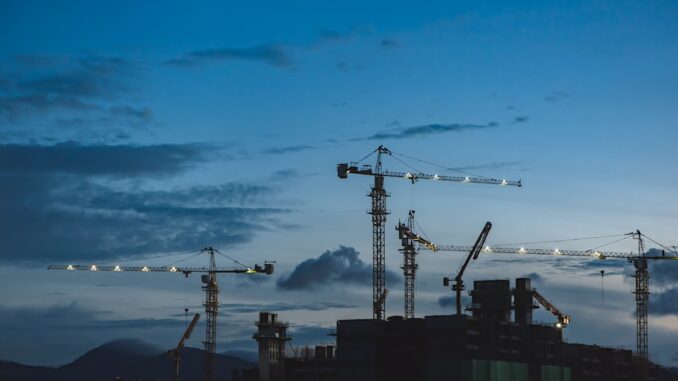
It’s a tough pill to swallow, isn’t it? The construction cranes, once towering symbols of progress and prosperity across the UK skyline, are increasingly idle. We’ve seen the headlines, heard the whispers, but the latest data paints a stark, unvarnished picture of a commercial property sector grappling with unprecedented challenges. In the third quarter of 2025, new commercial construction activity across the office, retail, and industrial sectors plummeted by an eye-watering 21% compared to the same period in 2024. That’s a drop to a mere 63 million square feet, the lowest level of commercial building activity since 2014, a rather sobering statistic if you ask me.
Think about that for a moment. Sixty-three million square feet. It sounds like a lot, doesn’t it? But when you consider the sheer ambition and historical output of the UK’s construction industry, it’s a stark indicator of just how much momentum we’ve lost. CoStar Group Inc., whose data usually offers a pretty clear snapshot of market health, has effectively waved a bright red flag, signalling deep trouble beneath the surface.
Successful low-energy building design hinges on careful planning. Focus360 Energy can help.
The Stark Reality: When the Numbers Don’t Lie
This isn’t just a minor blip; it’s a significant downturn. To put it into perspective, this means over a fifth less space being built for businesses, shops, and logistics hubs than just a year ago. Imagine the ripple effect this has: fewer jobs on site, less demand for building materials, and a palpable sense of caution settling over the industry. It’s not just about the numbers, it’s about the missed opportunities, the shelved dreams of developers, and the quiet anxieties of subcontractors wondering where the next big project will come from.
Back in 2014, we were just beginning to shake off the lingering effects of the global financial crisis. Now, here we are, more than a decade later, seemingly backsliding to similar levels of stagnation, but under a completely different set of pressures. It really makes you wonder, doesn’t it, if we’re truly prepared for what this long-term trend could mean for our urban landscapes and economic vibrancy?
A Web of Woes: Unpacking the Causes
So, what exactly has brought us to this point? It’s never just one thing, is it? The current predicament is a complex tapestry woven from several threads of economic strain and uncertainty, each pulling at the fabric of the construction industry.
The Cost Conundrum: Materials and Manpower
One of the most immediate and impactful culprits has been the relentless march of rising construction costs. Developers aren’t just seeing their profit margins squeezed; in many cases, they’re seeing projects become entirely unviable before the first shovel even hits the ground.
We’ve all heard the stories, I’m sure. Remember that period when timber prices went through the roof, or when the cost of steel seemed to jump week by week? It felt like a perfect storm. Energy prices, too, have played a huge part, directly impacting the manufacturing of crucial materials like cement, glass, and bricks. If it costs significantly more to make the stuff you build with, and then even more to transport it, well, you don’t need an economics degree to see where that leads.
And then there’s the perennial issue of labor shortages. It’s a problem that’s been brewing for years, but post-Brexit, it’s become particularly acute. We’ve seen a decline in the availability of skilled workers from the EU, and frankly, our domestic pipeline of talent isn’t quite keeping pace. I was chatting with a project manager just last week, and he told me, ‘You can’t just wave a magic wand and conjure up qualified electricians or bricklayers. It takes years to train ’em, and we’re just not doing enough.’ He’s right, of course. This scarcity drives up wages, which, while good for the individual worker, adds another layer of cost for developers already feeling the pinch. Plus, it causes delays, and time, as we know, is money, isn’t it?
Economic Headwinds and Shifting Sands
Beyond the immediate cost pressures, a broader economic gloom has settled over the investment landscape. Geopolitical events, for instance, have cast a long shadow. The aftermath of Brexit continues to ripple through our economy, creating layers of uncertainty around trade, regulation, and future investment flows. Investors, naturally, are cautious; they prefer stability, and frankly, the UK has been anything but stable in recent years.
Let’s not forget the ongoing effects of the COVID-19 pandemic. While the lockdowns are a distant memory, the changes in work patterns, consumer habits, and supply chain fragility are very much still with us. And then, there’s the small matter of interest rates. The Bank of England’s efforts to curb inflation, while necessary, have made borrowing significantly more expensive. For a sector like construction, which relies heavily on debt financing for large-scale projects, higher interest rates are a serious deterrent. Suddenly, the numbers don’t add up anymore, and those ambitious development plans end up back on the drawing board, or worse, gathering dust in a digital folder.
This confluence of factors has effectively sapped investor confidence. Why pour millions into a new development when the economic outlook is hazy, costs are unpredictable, and the eventual demand might not even be there? It’s a calculated risk, and right now, many are deciding the risk isn’t worth the reward.
Sector by Sector: Where the Brunt is Felt
While the overall picture is bleak, some sectors are feeling the squeeze more acutely than others. It’s a mixed bag of fortunes, or rather, misfortunes.
The Office Labyrinth: Emptiness in the Towers
The office sector, perhaps unsurprisingly, has been hit particularly hard. The pandemic acted as a catalyst, accelerating trends that were already nascent. Hybrid work isn’t just a buzzword anymore; it’s a fundamental shift in how and where we work. In London, the heart of our financial and business world, the vacancy rate has stubbornly stabilized at 10.7%. That’s a significant jump from the pre-pandemic figure of 4.5%. Picture this: sleek, modern office blocks, once bustling with activity, now featuring entire floors lying empty, their expensive fit-outs unused. It’s a strange sight, and one that poses serious questions for landlords and city planners.
Outside the capital, the situation is even more dire. In many regions, new office projects are virtually nonexistent. It’s a testament to how profoundly demand for traditional commercial workspaces has dropped. While there’s still a ‘flight to quality’ – companies downsizing but upgrading to premium, amenity-rich spaces to entice employees back – this only benefits a very specific segment of the market. Older, less efficient office stock is becoming increasingly obsolete, creating a potential headache for property owners and local authorities. What do you do with those vast, empty buildings that no one wants? That’s a challenge we’re really going to have to grapple with over the next few years.
Warehouse Wonderland to Warehouse Woes
Interestingly, the warehouse sector tells a different, yet equally concerning, story. The pandemic-induced surge in e-commerce created a veritable boom in warehouse construction. Everyone, it seemed, wanted a piece of the logistics pie, leading to a frenzy of speculative building. Developers couldn’t put up mega-sheds fast enough to meet the demand from online retailers scrambling to fulfill orders.
However, that frenetic pace has now cooled considerably. Consumer spending has softened, and the initial, explosive growth of e-commerce has stabilized. The result? Vacancy rates in the warehouse sector have more than doubled, jumping to 5.5% from a modest 2.5% in mid-2022. We’re now in a situation where supply is beginning to outstrip demand, particularly for older or less strategically located facilities. It’s a classic boom-and-bust cycle playing out before our very eyes, isn’t it? While the long-term trend for e-commerce remains strong, the immediate future for new speculative warehouse development looks a bit shaky. Developers are now much more selective, focusing on specific last-mile delivery hubs or highly automated, energy-efficient facilities that meet evolving sustainability standards.
Collateral Damage: Housing Hopes Under Threat
Perhaps one of the most worrying consequences of this commercial construction slump is its potential impact on the UK’s ambitious housing targets. The government has set a goal of building 1.5 million new homes over five years – a monumental task even in the best of times. But how can we hope to achieve this when the very industry responsible for building is facing such significant headwinds?
There’s a direct link, you see. Commercial and residential construction often share labor pools, supply chains, and even land. If skilled workers are leaving the industry due to a lack of commercial projects, where will the builders for new homes come from? If the cost of materials remains prohibitively high, it impacts the viability of residential developments just as much. Moreover, many urban housing projects involve the redevelopment of existing commercial sites – converting offices into flats, for instance. A stagnant commercial market might mean these opportunities are slower to materialize.
It’s a delicate ecosystem, and a slowdown in one area inevitably affects others. Failing to meet our housing targets won’t just be a political failure; it will exacerbate an already severe housing crisis, making homes even less affordable and accessible for millions across the country. And that’s something none of us want to see, surely.
A Call to Action: Paths to Revitalization
The industry isn’t just sitting idly by, of course. Leaders across the construction and property sectors are vocally calling for urgent policy interventions. They understand that this isn’t just about their bottom line; it’s about the broader economic health of the nation.
What are they proposing? A multi-pronged approach, naturally. Financial incentives for developers are high on the list. Think tax breaks for sustainable builds, grants for brownfield regeneration, or even innovative public-private partnerships that de-risk projects. The idea is to make those unviable projects viable again, to inject some much-needed confidence back into the market.
Then there’s the perennial issue of streamlining planning processes. Ah, the UK’s planning system – a labyrinth of bureaucracy that can often feel like it was designed to deter development rather than facilitate it. Delays, local opposition, and inconsistent decision-making can add years and millions to a project’s timeline and budget. Imagine if we could genuinely simplify the application process, speed up approvals, and provide clearer guidance. It would be a game-changer, wouldn’t it? Focusing on ‘permission in principle’ for certain types of development, or creating designated regeneration zones with fast-track planning, could unlock significant potential.
Finally, addressing the labor shortages isn’t just about short-term fixes; it requires a long-term strategy. This means investing heavily in skills training and apprenticeship programs, making construction a more attractive career path for younger generations. It might also involve a re-evaluation of immigration policies to ensure we can attract the skilled workers we demonstrably need. Retention is key, too. Creating better working conditions, promoting diversity, and offering genuine career progression could help stem the tide of experienced professionals leaving the industry. We can’t build a future if we don’t have the hands to do the building.
Looking Ahead: Building a Resilient Future
As the UK navigates these turbulent economic waters, the construction industry remains an absolutely critical engine for our national recovery and growth. It’s not just about erecting buildings; it’s about creating jobs, stimulating local economies, and providing the infrastructure that underpins modern life. Ignoring this downturn would be a mistake with far-reaching consequences.
The current challenges, while significant, also present an opportunity. An opportunity to rethink how and what we build. Could this slowdown force us to embrace more sustainable materials, more efficient construction methods, and more adaptable building designs? Perhaps it’s a chance to focus on quality over quantity, building structures that aren’t just functional but truly contribute to the well-being of their communities. We might just have to get a little creative, you know?
Addressing this commercial construction slump isn’t merely an industry concern; it’s a national imperative. It’s essential to ensure the continued development of the housing, infrastructure, and commercial spaces we need to support a growing, evolving population. The future of our built environment, and indeed, a significant chunk of our economic prosperity, depends on our ability to turn this ‘build-down’ into a resilient, sustainable ‘build-up’ once more.
Be the first to comment