
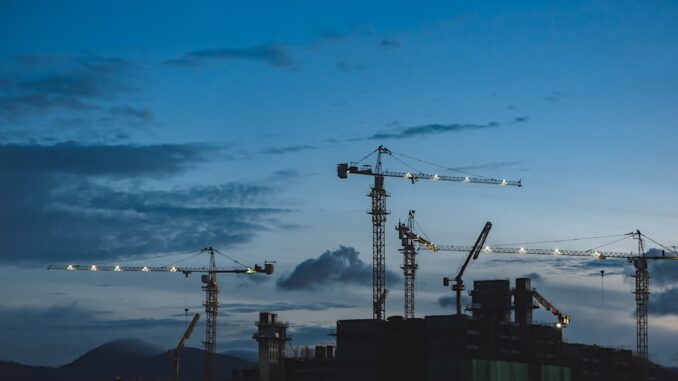

The UK Construction Industry: Building a Resilient Future Amidst Shifting Sands
The hum of machinery, the rhythmic clang of steel, the constant buzz of activity – it’s a familiar symphony across the UK. And for good reason. The nation’s construction industry, a bedrock of our economy, is on a distinctly promising trajectory, wouldn’t you say? With projections hinting at a solid 2% growth in 2025 and then settling into an average annual growth rate of 3.2% from 2026 all the way to 2029, it really paints a picture of resilience and expansion after what’s been, let’s face it, a pretty turbulent few years. It’s not just about building new structures; it’s about rebuilding confidence, too.
This isn’t just wishful thinking; there are tangible, powerful currents driving this optimism. Let’s delve into what’s actually fuelling this anticipated boom, and what challenges we’ll need to navigate to truly capitalize on it.
The Catalysts of Growth: Unpacking the Momentum
When we talk about growth, it’s never just one thing, is it? It’s a confluence of factors, a perfect storm of opportunity, if you will. The UK construction sector is currently benefiting from several significant tailwinds, each contributing its own unique thrust to the overall upward trajectory.
Focus360 Energy: property compliance services – pre-planning to post-construction. Learn more.
Government Investment: The National Infrastructure Push
The government’s commitment to investment truly stands out as a colossal driver. We’re talking about a pledge of over £35 billion annually by 2035 aimed squarely at enhancing the country’s energy infrastructure. Now, that’s a serious chunk of change, and it’s not just about keeping the lights on.
Think about it, the push towards Net Zero isn’t just an environmental goal; it’s a massive construction project waiting to happen. This investment flows into everything from sprawling offshore wind farms, their colossal turbines slicing through the salty air, to new nuclear power stations like Hinkley Point C and the planned Sizewell C, monumental undertakings in their own right. And then there are the crucial grid upgrades, those unseen arteries of our energy system, essential for distributing renewable power effectively. We can’t forget the burgeoning electric vehicle charging networks either, a whole new infrastructure layer literally springing up across our towns and motorways. This isn’t just building; it’s transforming a nation’s energy landscape, creating entirely new supply chains and requiring an immense range of skills.
But the government’s ambitions don’t stop at energy. While controversial in parts, projects like HS2, even with its revised scope, continue to demand significant construction output, connecting cities and unlocking development potential. National Highways has its own extensive program of road improvements, widening existing arteries and building new bypasses to ease congestion and improve connectivity. Then you have investments in digital infrastructure, the ubiquitous rollout of gigabit broadband, which requires extensive groundwork and cable laying across the country, reaching even the most remote corners. These aren’t just isolated projects; they’re interconnected pieces of a grander national puzzle, each contributing to improved productivity, better connectivity, and ultimately, a more competitive UK.
And let’s not overlook the ‘Levelling Up’ agenda. While sometimes criticized for its execution, the intent is to funnel investment into regions traditionally underserved, creating new hubs of economic activity. This often translates directly into construction work for new commercial spaces, upgraded public facilities, and housing developments in areas outside the traditional economic powerhouses. It’s a holistic approach, or at least it aims to be, where infrastructure investment isn’t just about utility but about regional rebalancing and growth. What a thought, eh?
Housing Initiatives: Building Homes, Building Communities
Another substantial pillar of growth comes from targeted housing initiatives, many driven by the public sector but with huge ripple effects into private development. The £2.6 billion NHS modular building program, for example, is more than just a figure; it’s a strategic move to fast-track the creation of essential facilities. We’re talking about new hospitals, school extensions, and, yes, much-needed housing, all constructed with incredible speed and efficiency using modern methods.
Modular construction, you see, offers a fascinating solution to many of the industry’s woes. Parts are built off-site in controlled factory environments, then transported and assembled, drastically cutting down on on-site time, reducing waste, and often improving quality. Imagine the benefit: a new wing for a hospital built in half the time, or a block of affordable flats ready for occupation months sooner. It’s a game-changer for addressing critical backlogs in healthcare and education infrastructure, and it’s paving the way for wider adoption of Modern Methods of Construction (MMC) across the industry. This program isn’t just about the NHS; it’s a powerful demonstration of what’s possible.
Beyond the modular program, the broader housing crisis continues to loom large, pushing successive governments to set ambitious targets. Schemes like the Affordable Homes Programme continue to provide vital funding for social and affordable housing projects, while efforts to replace schemes like Help to Buy aim to support homeownership in different ways. The sheer scale of demand for housing across the UK, especially for first-time buyers and in rapidly expanding urban centers, means that residential construction will remain a significant engine of growth for the foreseeable future. Every new development, whether a high-rise city apartment block or a suburban family home, represents a significant undertaking, fueling jobs, material demand, and economic activity. It’s a constant, vital churn, really.
Interest Rate Reductions: Breathing Life into Investment
Perhaps one of the most keenly anticipated developments for the entire economy, and certainly for construction, is the Bank of England’s decision to cut interest rates. Even a seemingly small reduction, like the recent shift from 4.25% to 4%, can have a surprisingly profound effect. Why? Because it directly impacts the cost of borrowing.
For developers, lower interest rates mean cheaper finance for their projects. That big residential scheme they were planning? It suddenly looks a lot more viable on the balance sheet. That new commercial complex? The numbers start to stack up better. It reduces the financial risk, encouraging more speculative development and accelerating projects that might have been shelved during periods of higher rates. And that, you know, translates directly into more cranes on the skyline and more boots on the ground.
For homebuyers, it means more affordable mortgages. Lower monthly repayments can unlock homeownership for a wider segment of the population, stimulating demand in the housing market. Increased buyer confidence then encourages developers to build more, creating a virtuous cycle. It’s not just about affordability, it’s also psychological; a rate cut signals confidence in the economic outlook, encouraging both consumers and businesses to spend and invest. It’s like the market takes a collective sigh of relief, and suddenly, everyone’s a bit more optimistic about the future. Of course, the real impact depends on how quickly and how much rates continue to fall, but the initial signs are certainly positive.
Regional Growth: A Patchwork of Opportunity
While the national picture is one of growth, it’s crucial to remember that the UK isn’t a monolith. Growth rates, opportunities, and challenges vary significantly from region to region, reflecting distinct local economies and investment priorities.
London’s Enduring Appeal
Unsurprisingly, London continues to be a powerhouse. The capital is anticipated to see nearly £2 billion in additional new housing output over the next five years. But it’s not just residential that drives London’s construction sector. The city’s status as a global financial and cultural hub means continuous demand for commercial developments – think sleek new office towers piercing the clouds, expansive mixed-use schemes that blend living, working, and leisure, and ongoing upgrades to its already complex transport network. The full impact of Crossrail (the Elizabeth Line) is still filtering through, opening up new development corridors, and there are always discussions around future transport enhancements. Regeneration zones, particularly in East London and along the Thames, are constant hives of activity, transforming former industrial lands into vibrant new communities. It’s a relentless pace, really, and it means London’s construction sector is always dynamic, always evolving. Yet, the cost of living and building here remains a formidable challenge, pushing boundaries on innovative design and construction methods to deliver value.
The North East’s Surprising Surge
Perhaps more interestingly, the North East is projected to experience the highest annual growth rate at a robust 5.1%. This isn’t just a statistical blip; it reflects a significant strategic shift and targeted investment. The ‘Levelling Up’ agenda is certainly playing a part, funnelling funds into regional development. But dig a little deeper, and you’ll find exciting new industries taking root. The region is becoming a hub for renewable energy manufacturing, particularly in areas like offshore wind, which requires massive port upgrades and new factory facilities. Advanced manufacturing, too, is seeing a resurgence, drawing on the region’s strong industrial heritage but pivoting towards high-tech production. The establishment of Freeports, with their associated tax breaks and simplified customs procedures, is also attracting new businesses and, critically, the construction projects needed to house them. It’s a fascinating transformation, moving beyond the traditional heavy industries to embrace a future built on green technology and innovation. For instance, you see massive new battery gigafactories taking shape, demanding complex civil engineering and highly specialized building work. It truly is a remarkable turnaround for a region that’s seen its share of economic hardship.
Beyond the Frontrunners: Other Regional Hotspots
Other regions also present compelling stories. The Midlands, strategically located at the heart of the country, continues to benefit from its logistics prowess and, of course, the ongoing, albeit modified, HS2 project. Its excellent connectivity makes it attractive for warehousing, distribution centers, and advanced manufacturing. The North West, with its vibrant cities of Manchester and Liverpool, sees ongoing urban regeneration projects, expanding tech sectors, and significant investment in healthcare and education facilities. Meanwhile, the South West, renowned for its natural beauty, isn’t just about tourism; it’s seeing growth in tech hubs around Bristol and strong demand for residential development, often with an emphasis on sustainable practices. Each region, then, offers a unique blend of construction opportunities, influenced by local economic drivers, available land, and strategic government initiatives. It really is a fascinating mosaic, isn’t it?
Navigating the Headwinds: Challenges on the Horizon
Despite the sunny forecasts, the construction industry isn’t without its storm clouds. Several significant challenges loom, and how the sector, and indeed the government, addresses them will be pivotal to sustaining this positive momentum.
The Persistent Shadow of Labour Shortages
This is perhaps the most talked-about challenge, a persistent ache for contractors across the country. The sector is grappling with a severe shortage of skilled labor, and it’s a multifaceted problem. Brexit, for instance, undeniably curtailed the flow of workers from the EU, a demographic that historically filled many roles on UK construction sites. Simultaneously, we have an aging workforce, with a significant proportion of skilled tradespeople nearing retirement age, taking with them decades of invaluable experience. This means the talent pipeline simply isn’t robust enough to replace them. Moreover, the industry has long struggled with its image; it’s often not seen as an attractive career path by younger generations, who might perceive it as manual, dirty, or lacking in digital opportunities.
The impact? Project delays become more common, labor costs inevitably rise, eating into already thin profit margins, and overall productivity can suffer. It’s a real squeeze for businesses of all sizes. So, what’s being done? Organisations like the CITB (Construction Industry Training Board) are working tirelessly to promote apprenticeships and vocational training, trying to nurture the next generation of bricklayers, electricians, and civil engineers. Employers themselves are investing more in upskilling their existing workforce and implementing internal training programs. The government’s T-Levels and various bootcamps also aim to provide fast-track routes into skilled trades. Furthermore, there’s an increasing emphasis on attracting a more diverse workforce – encouraging more women, people from ethnic minority backgrounds, and career changers to consider a future in construction. And let’s not forget the role of technology here; while not a silver bullet, greater adoption of automation, robotics, and digital tools like BIM can certainly help mitigate some of the pressure on human labor. But it’s a long road, and the skills gap won’t close overnight.
The Labyrinth of Regulatory Reforms
If labor shortages are a constant headache, regulatory reforms are often the complex puzzle that keeps project managers up at night. The government isn’t just tweaking rules; it’s overhauling building regulations with a significant focus on safety and efficiency. This is a direct response to tragedies like Grenfell, and the resulting Building Safety Act is a monumental piece of legislation, fundamentally reshaping how buildings are designed, constructed, and managed throughout their entire lifecycle.
This act introduces the ‘Golden Thread’ of information, requiring detailed, accurate, and accessible digital records of a building from conception through to demolition. It places stringent new duties on ‘duty holders’ (including clients, principal designers, and principal contractors), holding them much more accountable for safety. For developers and contractors, this means significant investment in new processes, training, and digital systems. It’s about moving from a culture of compliance to one of proactivity and deep responsibility. And while absolutely necessary for safety, it adds layers of complexity and cost to every project. Suddenly, you can’t just build; you must meticulously document every single step, proving your due diligence.
Beyond safety, the drive towards Net Zero is also ushering in a wave of sustainability regulations. We’re talking about ever-more stringent EPC ratings, targets for embodied carbon in materials, and new requirements for biodiversity net gain, where developments must enhance, rather than detract from, local ecosystems. These aren’t just ‘nice-to-haves’; they’re becoming legal obligations, influencing material selection, design choices, and construction methodologies. Planning reform, too, remains a hot topic, with ongoing debates about speeding up planning applications, local plan development, and environmental impact assessments, all of which can drastically affect project timelines and viability. The challenge, then, isn’t just understanding these new rules but integrating them efficiently into daily operations without stifling innovation or driving up costs to an unmanageable degree. It’s a tightrope walk, to be honest.
Supply Chain Volatility: The Unseen Costs
Remember those times when a specific type of timber or steel was suddenly impossible to get, or its price shot through the roof? That’s the reality of supply chain volatility, another significant challenge. Inflationary pressures, exacerbated by global events like the war in Ukraine or lingering post-pandemic disruptions, continue to affect material costs. Energy prices, too, have a direct impact on the cost of manufacturing and transporting everything from cement to insulation. This means project budgets are under constant pressure, making accurate forecasting incredibly difficult.
Beyond cost, there’s the issue of availability. Long lead times for specialized components, or sudden shortages of common materials, can bring entire construction sites to a grinding halt. I’ve heard stories from project managers desperately phoning around, just trying to find enough plasterboard to keep their teams working. It’s a real logistical nightmare. To combat this, many firms are looking at diversifying their supplier base, adopting more prefabrication (which reduces reliance on just-in-time delivery for raw materials), and investing in sophisticated digital supply chain management systems. The aim is to build greater resilience, but it’s an ongoing battle against external forces often beyond their control.
The Funding Climate Beyond Interest Rates
While interest rate cuts are positive, the broader funding and investment climate still presents complexities. Smaller and medium-sized enterprises (SMEs), which form the backbone of the industry, often struggle with access to finance compared to larger players. Investor confidence can also be sector-specific; there might be robust interest in data centers or logistics hubs, but perhaps more caution around speculative office developments in a post-pandemic world. The increasing importance of Environmental, Social, and Governance (ESG) criteria also means that projects failing to meet sustainability benchmarks might find it harder to attract investment, shifting focus towards ‘green’ projects. It’s a nuanced landscape, and securing the right kind of finance at the right terms remains a critical factor for success.
The Digital Horizon: Embracing Innovation and Technology
To overcome these hurdles and truly leverage the growth opportunities, the construction industry isn’t just looking to traditional methods; it’s increasingly embracing a wave of technological innovation. This isn’t optional anymore; it’s fundamental.
Modern Methods of Construction (MMC): The Future is Modular
We touched on modular construction earlier, but it’s part of a broader movement towards Modern Methods of Construction (MMC). This encompasses a range of techniques, from prefabrication of components to full offsite manufacturing of entire building sections. The benefits are compelling: significantly faster build times, enhanced quality control (because work happens in factory conditions, away from the unpredictable British weather), reduced waste, and improved site safety. Imagine a house arriving on the back of a lorry, virtually complete, needing only a few days for assembly. It’s a complete paradigm shift, moving construction from a craft-based, on-site activity to a more industrialized, manufacturing-led process. This approach helps mitigate labor shortages and improves efficiency dramatically. It really is quite smart.
Digital Transformation: Smarter Building, Smarter Management
Digitalization is revolutionizing every aspect of construction. Building Information Modelling (BIM) is no longer a niche concept but a standard practice, allowing for the creation of rich 3D models that contain not just geometric data but also information about materials, costs, and scheduling. This enables better collaboration, clash detection, and lifecycle management. The next step is digital twins – virtual replicas of physical assets that update in real-time, providing invaluable insights for maintenance and operation. AI is beginning to find its feet in project management, optimizing schedules, predicting risks, and analyzing vast datasets to improve decision-making. Drones now routinely survey sites, monitor progress, and inspect hard-to-reach areas, collecting data far more efficiently and safely than traditional methods. Even augmented reality (AR) is making inroads, allowing workers on site to overlay digital plans onto the physical environment, ensuring accuracy and reducing errors. The tools available now? They’re just incredible.
Sustainability Tech: Building Greener, Smarter
Technology is also central to achieving sustainability goals. The development of low-carbon materials, such as ‘green’ concrete or recycled steel, is reducing the embodied carbon of buildings. Smart building systems integrate sensors and AI to optimize energy consumption, heating, and ventilation, drastically improving operational efficiency. From energy-efficient glazing to advanced insulation techniques, innovation is driving down the environmental footprint of new constructions. This isn’t just about compliance; it’s about creating truly future-proof assets.
The Sustainability Imperative: A Non-Negotiable Future
Beyond technology, sustainability isn’t just a trend in construction; it’s a fundamental shift in philosophy. The industry recognizes its significant environmental impact and its crucial role in achieving the UK’s Net Zero targets.
Circular Economy Principles
There’s a growing push towards circular economy principles – moving away from the linear ‘take, make, dispose’ model. This means a greater focus on waste reduction (both on-site and in manufacturing), the reuse of materials from demolished buildings, and designing for deconstruction, making it easier to salvage components at the end of a building’s life. Think about it: a building as a material bank, not just a static structure. This requires innovative design, meticulous planning, and new supply chain models, but the environmental and economic benefits are immense.
Biodiversity Net Gain
A new and significant regulatory requirement is Biodiversity Net Gain (BNG), which mandates that new developments must result in a measurable improvement in biodiversity compared to the pre-development state. This means thinking about green spaces, habitat creation, and ecological considerations right from the initial planning stages. It’s a proactive step towards ensuring that construction contributes positively to natural capital, rather than just consuming it. This is definitely going to reshape landscaping and site planning as we know it.
Green Skills Development
Crucially, this sustainability drive also feeds back into the skills agenda. The industry needs to develop ‘green skills’ – expertise in sustainable design, low-carbon materials, renewable energy installation, and ecological impact assessment. This is a whole new vocational pathway, and it’s essential for building a truly future-ready workforce. It’s a huge opportunity, if you ask me.
Conclusion: A Future Built on Adaptability and Innovation
So, there you have it. The UK construction industry is undeniably poised for a period of robust growth, fueled by substantial government investments, strategic housing initiatives, and a more favorable interest rate environment. This isn’t just a fleeting moment; it’s a foundational shift, particularly with the relentless drive towards net-zero and significant national infrastructure upgrades.
However, we’d be naive to ignore the formidable hurdles that stand in the way. The persistent challenges of labor shortages, the complexities introduced by sweeping regulatory reforms like the Building Safety Act, and the ongoing volatility in global supply chains demand proactive, innovative solutions. These aren’t minor inconveniences; they require strategic thinking, significant investment, and a willingness to adapt at every level of the industry.
Ultimately, the sector’s ability to truly capitalize on this promising outlook hinges on its adaptability, its embrace of technology, and its commitment to fostering a skilled, diverse, and future-proof workforce. Will the industry rise to the occasion, transforming challenges into catalysts for even greater innovation and efficiency? Or will these significant headwinds temper its promising ascent? I’m optimistic, but it’s certainly going to be an interesting ride, filled with both immense opportunity and constant challenge. What do you reckon? It’s all about how we build for tomorrow, today.
Be the first to comment