

Mastering Energy-Efficient Building Design: Your Comprehensive Guide to Sustainable Spaces
Designing energy-efficient buildings isn’t just a fleeting trend anymore; it’s a fundamental necessity in our rapidly evolving world. Honestly, if you’re not thinking about it, you’re already behind. This isn’t just about ticking boxes for environmental impact, though that’s crucial, is it? It’s profoundly about achieving substantial, long-term cost savings, enhancing occupant comfort, and creating genuinely sustainable spaces that stand the test of time. By deliberately weaving strategic design choices into the very fabric of your projects, you won’t just improve energy performance; you’ll build healthier, more desirable environments. Let’s really dig into the core strategies for achieving optimal energy efficiency in new constructions, moving beyond the basics to embrace a truly holistic approach.
1. Optimize Building Orientation and Layout: Harnessing Nature’s Blueprint
The way you orient and lay out a building, its precise position on a site, can quite literally make or break its energy performance. It’s not just a detail; it’s foundational. By meticulously aligning your structure to maximize beneficial exposure to natural light and prevailing breezes, you can dramatically reduce your reliance on artificial lighting, heating, and even cooling systems. Think of it as collaborating with the sun and wind, rather than fighting against them.
Successful low-energy building design hinges on careful planning. Focus360 Energy can help.
Passive Solar Design Principles in Practice
This isn’t rocket science, but it does require careful thought. In many temperate and cooler climates, orienting the longest side of a building along an east-west axis is often ideal. Why? Because this allows for maximum glazing on the south side, which, during the colder winter months, invites ample sunlight to stream in, passively warming interior spaces. We call this ‘passive solar gain.’ It’s like your building is snuggling up to the sun for warmth. Conversely, well-designed overhangs, awnings, or strategically placed deciduous trees can provide essential shading during the hot summer, preventing that same intense sun from overheating the interior. You get the warmth when you need it, and protection when you don’t. It’s a beautiful, natural dance.
However, it’s not a one-size-fits-all solution. In predominantly hot climates, you might actually want to minimize east and west-facing windows, which can be brutal in the morning and afternoon, and instead focus on north-facing openings for consistent, diffused daylight without significant heat gain. It’s all about understanding your local climate’s unique rhythms.
Beyond the Compass: Internal Layout and Zoning
Building orientation isn’t just about external walls; it deeply influences the internal layout too. Imagine placing the main living areas, where people spend most of their time, on the sunnier, south-facing side. This not only capitalizes on natural light and warmth but also creates a more pleasant, bright atmosphere. Meanwhile, you could position utility rooms, garages, or even bedrooms that don’t require constant direct sunlight on the cooler, north side. Heat-generating rooms like kitchens or laundries, or those with significant plumbing, can often be better suited to the cooler side, helping to manage their internal heat output.
Furthermore, consider the concept of ‘zoning’ within the building. Can you design areas that can be thermally isolated? Maybe close off a rarely used guest wing during winter, or reduce heating/cooling in an office area after hours. This flexibility empowers occupants to manage energy use more granularly, tailoring comfort to specific needs and times. It’s a smarter way to live and work.
Site-Specific Nuances: Wind, Topography, and Local Microclimates
Don’t forget the broader site context. What are the prevailing wind patterns? Can you use landscaping or building massing to shelter your building from harsh winter winds, or conversely, funnel cooling summer breezes through it for natural ventilation? Topography also plays a role. Is there a slope that could allow for an earth-bermed wall, leveraging the earth’s stable temperature for insulation? Even adjacent buildings, trees, or geographical features can create microclimates that influence optimal orientation. A thorough site analysis, perhaps using a sun path diagram, is an indispensable first step. It’s about designing with your site, not just on it.
2. Invest in Quality Insulation and Air Sealing: The Building’s Thermal Blanket
Think of your building’s insulation as its primary thermal blanket, wrapping it snugly to keep conditioned air in and unwanted temperatures out. But a blanket with holes won’t keep you warm, right? That’s where air sealing comes in, working hand-in-hand with insulation to create a truly robust thermal envelope. This combination isn’t just a good idea; it’s absolutely non-negotiable for serious energy efficiency.
Understanding R-Value and U-Factor
Before we dive into types, let’s quickly clarify R-value and U-factor. The R-value measures thermal resistance; essentially, how well a material resists heat flow. Higher R-values mean better insulation. Conversely, U-factor measures the rate of heat transfer through a material or assembly. Lower U-factors mean less heat transfer. When you’re specifying insulation and windows, these numbers are your best friends; they quantify performance.
A Deep Dive into Insulation Materials
There’s a smorgasbord of insulation options available, each with its own benefits and suitable applications:
- Fiberglass Batts: These are probably what most people picture when they think of insulation. Affordable and widely available, fiberglass batts are good but rely heavily on proper installation. Any gaps, compressions, or voids dramatically reduce their effectiveness. They’re decent, but we can do better.
- Mineral Wool: Made from basalt rock and recycled slag, mineral wool offers excellent thermal performance and, crucially, superior fire resistance compared to fiberglass. It’s also dense, making it great for soundproofing. A fantastic choice for walls and floors.
- Cellulose: Often made from recycled newsprint, cellulose is a sustainable option. It can be blown in wet or dry, filling cavities completely and achieving a good R-value. It’s also excellent at blocking airflow, contributing to air sealing. Plus, you’re giving old newspapers a new life!
- Spray Foam (Open-Cell and Closed-Cell): This is where insulation truly gets smart. Spray foam expands to fill every nook and cranny, creating an incredibly effective air barrier and an excellent thermal barrier in one go. Open-cell foam is lighter, less dense, and offers good sound attenuation, while closed-cell foam is much denser, boasts a higher R-value per inch, and provides structural rigidity. The upfront cost is higher, but the long-term performance and air-sealing benefits are often unmatched.
- Rigid Panels (e.g., XPS, Polyiso): These foam boards are often used for continuous insulation on exterior walls, underneath slabs, or in roofing systems. They prevent ‘thermal bridging’ – heat escaping through structural elements like studs or rafters – which can be a significant energy drain. They’re tough and offer high R-values.
The Crucial Role of Air Sealing
Even the best insulation won’t perform optimally if air can freely leak in and out of your building. Air leaks can account for a staggering 25-40% of a home’s heating and cooling energy loss! It’s like having that high-quality thermal blanket but leaving all the windows open. Conditioned air escapes, and unconditioned air infiltrates, forcing your HVAC system to work overtime.
Common culprits for air leaks include electrical outlets, plumbing penetrations, rim joists, attic hatches, gaps around window and door frames, and even recessed light fixtures. Effectively sealing these pathways involves a range of techniques: carefully applied caulk, durable gaskets, high-performance weatherstripping, specialized tapes for sheathing, and expanding foam sealants for larger gaps. A ‘blower door test’ during construction is an invaluable tool, depressurizing the building to pinpoint hidden leaks with smoke pens or thermal cameras. It’s a game-changer for identifying those pesky hidden drafts.
By creating a tightly sealed thermal envelope – that continuous, unbroken layer of insulation and air barrier around the entire conditioned space – you significantly reduce the load on your heating and cooling systems, translating directly into substantial energy savings and a far more comfortable, consistent indoor environment. Don’t underestimate its power; it’s often the most cost-effective energy upgrade you can make.
3. Choose Energy-Efficient Windows and Doors: Guarding the Gateways
Windows and doors, while vital for light, views, and access, are historically significant culprits when it comes to energy loss. They’re literally holes in your wall, so making them as efficient as possible is paramount. Simply opting for standard, single-pane units is a huge missed opportunity in modern construction. We need to think smarter about these gateways.
The Science Behind High-Performance Glazing
Let’s break down the technologies that make modern windows so effective:
- Double- or Triple-Pane Glass: This is your starting point. Instead of a single sheet of glass, two or three panes are separated by a small gap. This trapped air or gas acts as an insulating layer, significantly reducing heat transfer. It’s simple physics, really.
- Inert Gas Fills: Those gaps between panes aren’t just empty air. They’re typically filled with inert gases like argon or krypton. These gases are denser than air, so they’re even better at inhibiting heat transfer through convection, boosting the window’s insulating performance without adding much weight.
- Low-Emissivity (Low-E) Coatings: This is where the magic really happens. A microscopically thin, transparent metallic coating is applied to one or more surfaces of the glass. Low-E coatings selectively reflect infrared (heat) radiation while allowing visible light to pass through. In winter, they reflect indoor heat back into the room, keeping you warmer. In summer, they reflect outdoor heat away, keeping you cooler. The specific placement and type of Low-E coating can be optimized for different climates – you’ll want different specs for a scorching desert than for a frigid tundra.
Key Performance Metrics for Windows
When evaluating windows, you’ll encounter a few crucial metrics:
- U-factor: As we discussed, this measures how well a window prevents heat from escaping. Lower U-factors are better.
- Solar Heat Gain Coefficient (SHGC): This indicates how much solar radiation passes through the window and becomes heat inside the building. In hot climates, you’ll want a low SHGC to minimize unwanted heat gain. In cold climates, a higher SHGC might be desirable to capitalize on passive solar heating.
- Visible Transmittance (VT): This measures how much visible light passes through the window. A higher VT means more natural light, which is usually a good thing, but sometimes you might sacrifice a little VT for better SHGC performance.
The Importance of Frames and Installation
It’s not just the glass that matters. The window frame itself can be a significant source of heat loss. Opt for frames made from materials with low thermal conductivity or those with ‘thermal breaks’ – non-conductive materials that separate the inner and outer parts of the frame, preventing heat from conducting through. Materials like vinyl, fiberglass, or wood generally perform better than standard aluminum frames in this regard. And never underestimate the importance of proper, professional installation. A perfectly efficient window, poorly installed, is just an expensive hole in your wall.
Doors: More Than Just an Entryway
Similarly, doors need attention. Look for insulated door cores, robust weatherstripping around the perimeter, and well-sealed thresholds. Fiberglass and steel doors with insulated cores often outperform solid wood doors in terms of energy efficiency. Even the smallest gaps around a door can allow significant air infiltration, so ensuring a tight seal is vital. Think of your doors as miniature, high-performance walls; they deserve the same level of scrutiny.
Integrating Shading Strategies
Finally, windows work best when integrated with smart shading. External shading devices like deep overhangs, awnings, or adjustable louvers are generally more effective than internal blinds because they block the sun’s heat before it enters the building. Imagine the difference a well-designed overhang makes on a sweltering summer day; it’s like a cool sip of water. These choices enhance energy efficiency and dramatically improve indoor comfort, minimizing glare and creating a more visually pleasant environment. You can’t ask for much more than that.
4. Incorporate Renewable Energy Sources: Tapping into Nature’s Power Grid
Harnessing renewable energy isn’t just a feel-good gesture; it’s a powerful strategy to significantly offset a building’s energy consumption, dramatically reduce operating costs, and bolster energy independence. We’re talking about shifting from finite, carbon-emitting sources to the limitless power of the sun and earth. It’s a smart business decision with monumental environmental benefits.
Solar Photovoltaics (PV): The Sun on Your Roof
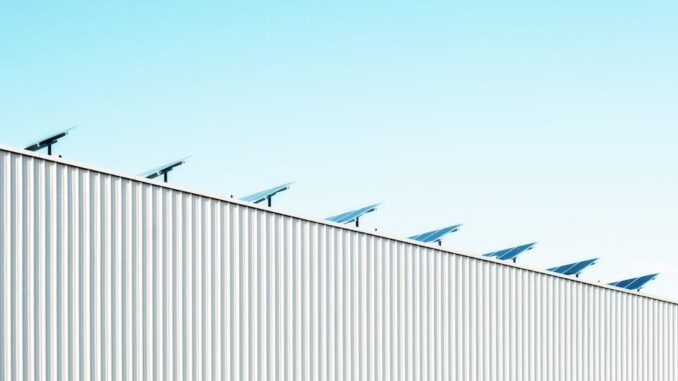
When most people think of renewable energy for buildings, solar panels immediately come to mind. And for good reason! Solar PV systems convert sunlight directly into electricity, providing a clean, silent energy source that can substantially lower or even eliminate your electricity bills. It’s like having your own miniature power plant.
- Types of Solar Panels: You’ll primarily encounter monocrystalline and polycrystalline silicon panels. Monocrystalline are generally more efficient and aesthetically sleek, while polycrystalline are a bit more budget-friendly. Thin-film panels are another option, often more flexible but less efficient for rooftop applications.
- System Configurations: Most residential and commercial systems are ‘grid-tied,’ meaning they’re connected to the utility grid. When your panels produce more electricity than you’re using, the excess can be fed back into the grid, earning you credits (via ‘net metering’ in many areas). When production is low, you draw from the grid. ‘Off-grid’ systems, though less common for urban buildings, rely on battery storage and generators for complete independence. Hybrid systems offer the best of both worlds, with grid connection and battery backup.
- Incentives and ROI: This is where it gets really attractive. Many governments and utilities offer substantial incentives – federal tax credits, state rebates, net metering programs, and property tax exemptions – that can significantly reduce the upfront cost and improve the return on investment (ROI). Often, the payback period for solar PV is surprisingly short, and from then on, you’re essentially getting free electricity. It’s a no-brainer, financially speaking.
- Considerations: Site assessment is key. You need unobstructed sunlight for most of the day. Structural integrity of the roof, local zoning regulations, and aesthetic integration are also important factors to consider during design.
Solar Thermal Systems: Hot Water, Anyone?
While PV generates electricity, solar thermal systems use the sun’s energy to heat water directly. Collectors on the roof absorb solar radiation to warm a fluid, which then transfers heat to your domestic hot water tank. This can significantly reduce the energy required for water heating, which is often a substantial portion of a building’s energy load. Imagine hot showers powered by the sun; it’s a simple, elegant solution.
Geothermal Heat Pumps: Tapping Earth’s Stable Temperature
Often overlooked but incredibly efficient, geothermal heat pumps (GHPs) leverage the stable temperature of the earth (or a nearby water body) just a few feet below the surface. The ground remains at a relatively constant temperature year-round – cooler than the air in summer, warmer than the air in winter. GHPs use a closed loop of buried pipes containing a circulating fluid to exchange heat with the earth. In winter, they extract heat from the ground and transfer it into the building; in summer, they reverse the process, moving heat from the building into the cooler ground. It’s ingenious.
- Types of Systems: ‘Closed loop’ systems involve buried pipes in horizontal or vertical configurations. ‘Open loop’ systems draw water from a well, extract heat, and then discharge it, which isn’t always feasible or permitted. The upfront installation costs for geothermal can be higher due to the excavation, but their operational efficiency is outstanding, often providing heating, cooling, and even hot water with incredible economy. They’re typically among the most efficient HVAC systems available, hands down. Plus, they’re invisible once installed and virtually silent.
Integrating renewable energy isn’t just about saving money; it’s about making a statement, reducing your carbon footprint, and enhancing the resilience of your building. It’s a proactive step towards a cleaner, more sustainable future, and frankly, it’s becoming an expectation for modern, high-performance architecture.
5. Implement Smart Technology and Automation: The Intelligent Building Brain
In our increasingly connected world, leveraging smart technology and automation is no longer a luxury; it’s a fundamental pillar of truly energy-efficient building design. These systems act as the intelligent brain of your building, constantly monitoring, adjusting, and optimizing energy usage in real-time. It’s about working smarter, not harder, and letting technology handle the tedious bits of energy management.
Smart Thermostats: Beyond Simple Setpoints
Forget your old dial thermostat. Modern smart thermostats, like those from Ecobee or Nest, do so much more. They learn your habits, adjust heating and cooling based on occupancy sensors, integrate with weather forecasts, and even allow for zone-specific control. Imagine a thermostat that knows you’re heading home and gently starts cooling the house, or automatically adjusts temperatures in rooms that aren’t currently occupied. This level of granular control ensures energy isn’t wasted heating or cooling empty spaces, adapting to your actual lifestyle rather than rigid schedules.
Intelligent Lighting Systems: Only Light When Needed
Lighting accounts for a significant portion of a building’s electricity consumption. Smart lighting systems dramatically cut this down:
- Occupancy/Vacancy Sensors: These automatically turn lights on when someone enters a room and off when it’s empty. Simple, yet incredibly effective, especially in spaces like restrooms, conference rooms, or storage areas that aren’t constantly occupied.
- Daylight Harvesting Sensors: These clever sensors detect the amount of natural light entering a space and automatically dim or brighten artificial lights to maintain a consistent desired light level. Why blast full artificial light when the sun is already doing most of the work? It’s intuitive energy saving.
- Automated Dimming and Scheduling: You can program lights to dim during certain times of the day, or to turn off entirely on a schedule. This is invaluable for commercial buildings after business hours, or even for residential outdoor lighting.
Automated Shading and Ventilation
Smart technology can extend to controlling blinds, shades, and even ventilation. Automated blinds can adjust throughout the day to optimize daylighting and solar heat gain, opening to let in winter sun and closing to block harsh summer rays. Similarly, smart ventilation systems can monitor indoor air quality (CO2 levels, VOCs) and external weather conditions, opening and closing windows or activating fans for natural ventilation when conditions are favorable, and then sealing up when they’re not. This dynamic response to environmental conditions means your building is always reacting optimally.
Energy Monitoring and Predictive Analytics
Beyond control, smart systems provide invaluable data. Real-time energy monitoring systems can show you exactly where and when energy is being consumed, helping to identify inefficiencies and ‘phantom loads’ (devices consuming power even when off). Even more advanced, Artificial Intelligence (AI) is transforming building management. AI can analyze vast amounts of data – weather patterns, occupancy schedules, energy prices, HVAC performance – to predict future energy needs and proactively optimize systems. It can pre-cool a building on a hot day based on a forecast, or identify maintenance needs before a component fails. It’s like having a dedicated energy manager working 24/7.
While there are considerations around data privacy and cybersecurity with interconnected systems, the benefits of smart technology in achieving deep energy efficiency, enhancing convenience, and improving overall building performance are simply too compelling to ignore. It truly transforms a static structure into a dynamic, responsive, and ultimately, more sustainable living or working environment.
6. Utilize Natural Ventilation and Heat Recovery: Breathing with Your Building
Designing for natural ventilation is a timeless, elegant strategy that often reduces, or even eliminates, the need for mechanical cooling systems during milder weather. It’s about letting your building breathe naturally, exchanging stale indoor air for fresh outdoor air using natural forces like wind and buoyancy. But for situations where you need mechanical ventilation, especially in colder climates, heat recovery systems ensure that you’re not just throwing away your expensively heated or cooled air.
The Art of Natural Ventilation
Natural ventilation harnesses fundamental principles of physics:
- Cross-Ventilation: This is perhaps the most straightforward. By placing operable windows or vents on opposite sides of a room or building, wind pressure pushes air in on one side and pulls it out on the other, creating a refreshing breeze. It’s incredibly effective for cooling during mild periods. Think of a pleasant cross-breeze on a spring day; it feels good, and it’s free!
- Stack Effect (or Chimney Effect): This relies on the principle that warm air rises. If you have openings at the bottom of a building and higher-level openings (like clerestory windows, roof vents, or a thermal chimney), the warmer, lighter indoor air rises and exits through the top, drawing cooler, denser fresh air in through the lower openings. This creates a continuous airflow even on still days. Atriums, for example, can be designed to facilitate a powerful stack effect.
- Night Purging/Cooling: In many climates, even after a hot day, nights can be significantly cooler. Night purging involves opening the building up at night to flush out accumulated heat and pre-cool the building’s thermal mass (walls, floors) for the next day. This can significantly reduce the need for daytime air conditioning.
Considerations for Natural Ventilation
While powerful, natural ventilation isn’t always suitable. Factors like external noise pollution, security concerns, outdoor air quality (pollen, smog), and extreme weather conditions can limit its effectiveness or desirability. That’s where mechanical systems, especially those with heat recovery, come into play.
Heat Recovery Ventilators (HRVs) and Energy Recovery Ventilators (ERVs)
Modern buildings are designed to be increasingly airtight to maximize insulation and prevent uncontrolled air leakage. While this is great for energy efficiency, it also means you need a way to bring in fresh outdoor air to maintain good indoor air quality (IAQ) and prevent ‘sick building syndrome.’ That’s precisely what HRVs and ERVs do, and they do it incredibly efficiently.
- How They Work: Both systems continuously exhaust stale indoor air and bring in fresh outdoor air. The magic lies in the heat exchange core. As the two air streams pass each other without mixing, heat (and in an ERV, moisture) is transferred from the warmer air stream to the cooler one. So, in winter, the outgoing warm, stale air pre-heats the incoming cold, fresh air. In summer, the outgoing cool, stale air pre-cools the incoming hot, fresh air. You get fresh air without throwing away all the energy you spent conditioning the indoor air.
- HRVs (Heat Recovery Ventilators): Primarily transfer heat. They’re excellent for colder, drier climates where retaining indoor heat is paramount and moisture transfer isn’t as critical.
- ERVs (Energy Recovery Ventilators): Transfer both heat and moisture. They’re ideal for humid climates (where they help keep indoor humidity down in summer) and very dry climates (where they can help retain some indoor humidity in winter). They balance thermal and latent energy, making them more versatile.
By carefully integrating both passive natural ventilation strategies and active heat/energy recovery systems, you can ensure a continuous supply of fresh, healthy air while minimizing energy waste. It’s about balancing airtightness with essential ventilation, ensuring comfort and health without compromising on efficiency. This dual approach gives your building a dynamic respiratory system, always operating at peak performance.
7. Select High-Efficiency HVAC Systems: The Heartbeat of Your Building
The Heating, Ventilation, and Air Conditioning (HVAC) system is arguably the largest energy consumer in most buildings. It’s the circulatory system, the lungs, the very heartbeat of a comfortable indoor environment. Therefore, choosing a high-efficiency system isn’t just a suggestion; it’s a critical decision that will impact your energy bills and comfort for decades. And let me tell you, neglecting your HVAC is like ignoring persistent chest pains – it’s going to catch up with you.
Beyond the Basics: Modern HVAC Systems
While traditional furnaces and central air conditioners still have their place, the landscape of high-efficiency HVAC has expanded dramatically:
- Energy Star Rating: Always look for the Energy Star label. This designation means the system meets strict energy efficiency guidelines set by the EPA and Department of Energy, ensuring it operates with significantly less power than conventional models. It’s a reliable indicator of quality and efficiency.
- Heat Pumps (Air-Source and Ground-Source): These are truly game-changers. Unlike furnaces that generate heat by burning fuel, heat pumps move heat. In winter, an air-source heat pump extracts heat from the outside air (even cold air has heat!) and transfers it indoors. In summer, it reverses, moving indoor heat outside. Ground-source (geothermal) heat pumps, as discussed earlier, are even more efficient as they leverage the stable temperature of the earth. They provide both heating and cooling in one highly efficient unit.
- Ductless Mini-Split Systems: Ideal for additions, renovations, or zoned applications, mini-splits eliminate the energy losses associated with ductwork. Each indoor unit provides independent heating and cooling to a specific zone, giving you incredible control and flexibility. They’re also whisper-quiet and very efficient.
- Variable Refrigerant Flow (VRF) Systems: For larger commercial buildings, VRF systems are incredibly sophisticated. They allow for simultaneous heating and cooling in different zones, and their variable speed compressors precisely match cooling or heating output to the exact load, leading to significant energy savings. They’re like a highly optimized, multi-lane highway for conditioned air.
- Condensing Boilers: If you’re using a hydronic (hot water) heating system, a condensing boiler is a must. They capture heat from exhaust gases that would otherwise be lost up the chimney, significantly improving efficiency.
Key Efficiency Metrics
When evaluating systems, pay attention to these ratings:
- SEER (Seasonal Energy Efficiency Ratio): For air conditioners, higher SEER ratings indicate greater energy efficiency.
- HSPF (Heating Seasonal Performance Factor): For heat pumps, higher HSPF ratings denote better heating efficiency.
- EER (Energy Efficiency Ratio): For commercial AC, often a simpler snapshot of efficiency at a specific operating condition.
The Critical Role of Ductwork and Zoning
A high-efficiency HVAC unit is only as good as its distribution system. Poorly designed, leaky, or uninsulated ductwork can lose 20-30% of conditioned air before it even reaches your rooms! Ensure ducts are properly sized, meticulously sealed with mastic or foil tape (never duct tape!), and insulated, especially if they run through unconditioned spaces like attics or crawl spaces. Seriously, a lot of people overlook this, and it’s a big mistake.
Furthermore, implementing zoning – dividing your building into different temperature-controlled areas – is crucial. Why heat or cool an entire building to one temperature when different areas have different needs or occupancy patterns? Zoning systems, often integrated with smart thermostats, save energy and enhance comfort by delivering conditioned air precisely where and when it’s needed.
The Unsung Hero: Maintenance
Finally, the best system in the world will degrade in performance without regular maintenance. Changing air filters monthly, cleaning coils, checking refrigerant levels, and getting professional tune-ups annually ensures your system runs optimally and efficiently for its full lifespan. I once knew a guy who didn’t change his air filter for three years; his energy bill was astronomical, and his AC unit essentially committed suicide. Don’t be that guy. Regular maintenance isn’t just a chore; it’s an investment in your comfort and your wallet.
8. Optimize Daylighting and Lighting Design: Illumination with Intelligence
Think about how good it feels to walk into a space bathed in natural light. It’s not just pleasant; it’s fundamentally energizing, boosts productivity, and significantly reduces the need for artificial illumination. Optimizing daylighting is one of the most powerful and often overlooked strategies for energy-efficient design. When natural light isn’t enough, smart artificial lighting systems step in to fill the gap, but with maximum efficiency.
Harnessing the Sun: Daylighting Strategies
The goal of daylighting is to bring natural light deep into building interiors, reducing reliance on electric lights during daylight hours. This is an art form as much as a science:
- Narrow Floor Plates: Buildings with narrower floor plates allow natural light to penetrate further from windows on both sides. This simple structural decision can have a profound impact on daylight autonomy.
- High Ceilings and Clerestory Windows: Taller ceilings with windows placed high on the wall (clerestories) allow light to wash down into the space, distributing it more evenly and reaching deeper into the room than standard windows.
- Light Shelves: These clever horizontal surfaces, usually placed above eye level on the exterior or interior of a window, reflect sunlight up onto the ceiling. The ceiling then acts as a giant diffuser, bouncing soft, diffused light deeper into the room without creating glare. It’s like a natural light amplifier.
- Skylights and Light Tubes (Solar Tubes): For interior spaces that don’t have direct access to exterior walls, skylights can bring a flood of overhead light. Light tubes, smaller and more versatile, use highly reflective materials to channel sunlight from a roof mounted dome down into interior rooms, even closets or hallways, making otherwise dark spaces bright and inviting.
- Atriums and Courtyards: In larger buildings, central atriums or internal courtytyards can serve as massive light wells, distributing natural light to surrounding spaces and floors. They create a dramatic aesthetic while serving a crucial functional purpose.
- Interior Finishes: Don’t forget the power of paint and surface materials! Light-colored walls, ceilings, and floors reflect natural light more effectively, helping to distribute it throughout a space and brighten interiors, further reducing the need for artificial light.
Smart Artificial Lighting: The Modern Glow
Even with optimal daylighting, artificial lighting is necessary, especially after dark or on gloomy days. Here, the focus shifts to highly efficient fixtures and intelligent controls:
- LED Lighting: The undisputed champion of modern lighting. LEDs (Light-Emitting Diodes) are incredibly energy-efficient, boast exceptionally long lifespans (often tens of thousands of hours), are dimmable, and offer a wide range of color temperatures to suit any mood or task. Swapping out old incandescent or fluorescent bulbs for LEDs is one of the quickest, most impactful energy-saving upgrades you can make.
- Advanced Lighting Controls: This is where the ‘smart’ comes in:
- Occupancy/Vacancy Sensors: As mentioned previously, these automatically switch lights on and off based on presence, ensuring lights are only on when a space is occupied. It’s so simple, yet so effective.
- Daylight Harvesting Sensors: These integrate with electric lighting systems, dimming or turning off artificial lights when sufficient natural light is present. Why pay for electricity if the sun is giving it away for free?
- Dimmers and Timers: Giving occupants the ability to adjust light levels to their needs, or programming lights to turn off at specific times, further minimizes unnecessary energy consumption.
- Task Lighting vs. Ambient Lighting: Designing with a combination of general ambient lighting (for overall illumination) and specific task lighting (for workspaces, reading nooks) allows for more efficient light use, reducing the need to brightly illuminate an entire room when only a small area is in use.
By carefully integrating daylighting strategies with high-efficiency LED lighting and intelligent controls, you create spaces that are not only beautifully illuminated and comfortable but also incredibly energy-efficient. It’s about designing for a dynamic interplay between natural and artificial light, responding intelligently to the needs of the occupants and the rhythms of the day.
9. Choose Sustainable Building Materials: Building with Conscience
Selecting sustainable building materials isn’t just an ecological nicety; it’s a profound commitment that impacts a building’s entire lifecycle, from its ‘birth’ to its ‘end-of-life,’ and significantly contributes to its overall energy efficiency and reduced environmental footprint. It’s about building with conscience, making choices that resonate far beyond aesthetics or immediate cost.
Beyond the Price Tag: Lifecycle Assessment
When evaluating materials, a truly sustainable approach demands a ‘lifecycle assessment’ (LCA). This means looking at:
- Embodied Energy: The total energy consumed to extract, process, manufacture, transport, install, and ultimately dispose of a material. Materials with high embodied energy, like concrete or steel produced through energy-intensive processes, can significantly offset other green efforts if not carefully considered.
- Source and Manufacturing: Where does the material come from? Is it virgin or recycled? How much pollution or waste is generated during its production? Is it locally sourced, reducing transportation energy?
- Durability and Longevity: A material that lasts longer requires fewer replacements, saving resources and energy over time. Quality almost always trumps cheapness in the long run.
- End-of-Life: Can the material be reused, recycled, or biodegraded? Or will it end up in a landfill, becoming a long-term problem?
Materials with Low Embodied Energy and Sustainable Attributes
Thankfully, there’s a growing array of materials that excel in sustainability metrics:
- Recycled and Reclaimed Content: Utilizing materials like recycled steel, reclaimed wood (from old barns or demolition sites), or recycled content insulation (like cellulose from newsprint or denim scraps) dramatically reduces embodied energy and diverts waste from landfills. It’s circular economy in action.
- Locally Sourced Materials: Reducing the ‘travel miles’ of your materials cuts down on transportation energy and supports local economies. Think about regional stone, lumber, or even earth for rammed earth construction.
- Rapidly Renewable Resources: Materials like bamboo, cork, and linoleum (made from linseed oil) grow quickly, are durable, and offer superior insulating or acoustic properties. Bamboo, for instance, can grow to maturity in just a few years, a stark contrast to traditional timber.
- Natural Insulators: Beyond conventional options, consider materials like straw bales (an agricultural byproduct), hempcrete (a mix of hemp hurds and lime), or even mycelium (mushroom-based) bricks. These often offer excellent insulation values, are carbon-sequestering, and have incredibly low embodied energy.
- Insulated Concrete Forms (ICFs): These hollow foam blocks filled with concrete create incredibly durable, well-insulated, and airtight walls, offering superior thermal performance and acoustic dampening.
- Low VOC (Volatile Organic Compound) Materials: While not directly energy-efficient, choosing paints, sealants, and finishes with low or no VOCs is crucial for maintaining excellent indoor air quality, which is intrinsically linked to occupant health and comfort in an airtight, energy-efficient building.
- Cool Roofs: For roofing, selecting materials that are highly reflective and emissive helps to reduce the ‘heat island effect’ in urban areas and significantly lowers the cooling load of the building, especially in hot climates. Think light-colored membranes or reflective coatings.
Certifications and Standards
Look for certifications like LEED (Leadership in Energy and Environmental Design), Living Building Challenge, or Cradle to Cradle. These rigorous standards guide material selection, encouraging transparency and verified sustainable practices. Making thoughtful material choices is a powerful way to reduce your building’s lifetime environmental impact, ensuring it’s not just efficient, but genuinely good for the planet.
10. Implement Water-Efficient Design: The Water-Energy Nexus
Water conservation might seem like a separate issue from energy efficiency, but in reality, they’re inextricably linked – a concept often called the ‘water-energy nexus.’ Think about it: it takes a tremendous amount of energy to pump, heat, treat, and deliver water to your building, and then even more energy to process wastewater. So, reducing water consumption isn’t just about saving precious H2O; it’s a direct route to significant energy savings too.
Indoor Water Efficiency: Smart Fixtures and Appliances
Many of the biggest opportunities for water savings are right inside the building:
- Low-Flow Fixtures: This is a no-brainer. Installing low-flow faucets (often 1.5 gallons per minute or less), showerheads (2.0 GPM or less), and aerators can drastically reduce water use without compromising performance. Modern low-flow showerheads provide an excellent experience, so you won’t feel like you’re showering under a dripping tap.
- High-Efficiency Toilets: Older toilets can use 3.5 to 7 gallons per flush (GPF)! Modern high-efficiency models use 1.28 GPF or even less. Dual-flush toilets offer two options: a lower volume flush for liquid waste and a higher volume for solid waste. This is an enormous saver.
- Hot Water Recirculation Systems: For buildings with long plumbing runs, waiting for hot water wastes a lot of cold water. Recirculation pumps quickly deliver hot water to fixtures, reducing waste and enhancing convenience. They can be on-demand or timer-based, further optimizing energy use.
- Energy Star Appliances: Dishwashers and washing machines with the Energy Star label are not only designed to use less electricity but also significantly less water. This is a double win for energy and water savings.
Outdoor Water Efficiency: Beyond the Spigot
Outdoor landscaping often accounts for a huge portion of a building’s water use. Smart design here can be transformative:
- Rainwater Harvesting: Collecting rainwater from roofs and storing it in cisterns or barrels is an ancient, yet highly effective, practice. This ‘harvested’ water can be used for irrigation, toilet flushing, or other non-potable purposes, significantly reducing reliance on municipal water supplies. It’s free water, falling from the sky!
- Greywater Recycling: ‘Greywater’ is gently used water from sinks, showers, and laundry (excluding toilet water). With proper filtration and local code compliance, this water can be safely reused for irrigation or toilet flushing, dramatically cutting down on freshwater demand. It takes a bit more planning, but the savings are substantial.
- Drought-Tolerant Landscaping (Xeriscaping): Designing landscapes with native or drought-resistant plants that require minimal irrigation once established is a cornerstone of water-efficient outdoor design. Say goodbye to thirsty lawns and hello to beautiful, resilient gardens that thrive on less water.
- Smart Irrigation Systems: These systems use weather data, soil moisture sensors, and plant-specific needs to apply precisely the right amount of water, only when necessary. No more sprinklers running during a rainstorm or watering sidewalks unnecessarily. It’s precision irrigation.
By integrating these water-efficient strategies, you’re not just being environmentally responsible; you’re actively reducing the energy needed for water delivery and treatment, contributing to both environmental sustainability and considerable operational cost savings. It’s a holistic approach, recognizing that every drop of water saved often means a watt of energy conserved. It’s about designing buildings that are truly regenerative, working with, rather than against, our natural resources.
A Sustainable Future, Built Today
Ultimately, designing energy-efficient buildings in today’s climate isn’t just about achieving a certification or cutting a few dollars from a utility bill. It’s about a much broader vision. It’s about creating spaces that are inherently healthier, more resilient, and genuinely comfortable for the people who inhabit them. It’s about making a tangible, positive impact on our planet, yes, but also about securing long-term economic benefits and enhancing asset value. The choices we make during the design phase – from orienting the structure with the sun’s path to selecting the smallest faucet – ripple through the entire lifespan of a building.
So, as you embark on your next project, remember that integrating these strategies isn’t a series of isolated tasks; it’s a synergistic dance. Each element informs and enhances the others, creating a cohesive, high-performance whole that’s far greater than the sum of its parts. Let’s design buildings that don’t just exist, but truly thrive – sustainable beacons for the generations to come. The future is literally in our hands, or rather, on our drawing boards. Let’s build it right.
References
- Energy-Efficient Building Design Guide 2025. Construction Placements. (constructionplacements.com)
- Energy Efficient Building Design: 23 Key Features To Consider. Aeroseal. (aeroseal.com)
- Designing and Building an Energy-Efficient Home. e-architect. (e-architect.com)
- Ultra-Efficient Home Design. U.S. Department of Energy. (energy.gov)
- Efficient Home Design. U.S. Department of Energy. (energy.gov)
- Designing An Energy Efficient Buildings. AIA Community Hub. (communityhub.aia.org)
- 6 Essential Tips for Energy-Efficient Architectural Design. Illustrarch. (illustrarch.com)
- How to Design an Energy Efficient Building. e-architect. (e-architect.com)
- Architecture Tips for Designing Energy-Efficient Buildings. Amazing Architecture. (amazingarchitecture.com)
- How AI Is Making Buildings More Energy-Efficient. Time. (time.com)
- The Empire State Building’s Green Retrofit Was a Success. Will Other Buildings Follow Suit? Time. (time.com)
- 9 Essential Tips for Energy Efficient Construction in 2025. Auroma Architecture. (auromaarchitecture.com)
- This Air Conditioning Strategy Is the Sweet Spot for Saving Energy and Money, Experts Say. AP News. (apnews.com)
- Introducing Causal Inference in the Energy-Efficient Building Design Process. arXiv. (arxiv.org)
The discussion of water-efficient design is a critical addition. Beyond individual building strategies, how can city planning and infrastructure be optimized to support water conservation and reduce the energy footprint of water management at a larger scale?
That’s a fantastic point! Expanding the focus to city-level planning opens up so many possibilities. Think about integrated water management systems, green infrastructure networks, and policies that incentivize water-wise development. The potential for large-scale impact is huge!
Editor: FocusNews.Uk
Thank you to our Sponsor Focus 360 Energy
So, you’re saying orientation is everything? Guess I’ll need a compass for my next Lego build. Seriously though, has anyone explored dynamic building orientation that adjusts to seasonal sun angles?
That’s a fantastic point about dynamic orientation! Some innovative designs incorporate rotating structures or adjustable shading to optimize sun exposure throughout the year. It’s a complex area, and ongoing research explores affordable, practical solutions for wider adoption. Thanks for sparking that thought!
Editor: FocusNews.Uk
Thank you to our Sponsor Focus 360 Energy
The point about integrating water-efficient design is well-taken. Reducing water consumption lowers energy demand, and this is especially relevant in areas with water scarcity. Expanding on this, are there innovative financing models to encourage adoption of greywater and rainwater harvesting systems in new construction?
Great question about financing models for water conservation! Beyond rebates, some municipalities are exploring low-interest loans specifically for green building upgrades, including greywater and rainwater systems. Performance-based incentives, where developers are rewarded for achieving measurable water savings, are another promising avenue. It’s all about making sustainable choices financially attractive!
Editor: FocusNews.Uk
Thank you to our Sponsor Focus 360 Energy
Given the impact of building materials’ lifecycle on energy efficiency, how can we better quantify and communicate the long-term benefits of choosing sustainable options to clients focused on upfront costs?
That’s a great question! Quantifying long-term benefits can be tricky. One approach is to use lifecycle cost analysis (LCCA) software to demonstrate the total cost of ownership. Showcasing case studies where sustainable materials led to reduced energy bills and maintenance over time can also be very persuasive. It’s about shifting the focus from initial price to long-term value. What are your experiences?
Editor: FocusNews.Uk
Thank you to our Sponsor Focus 360 Energy
Given the significance of material lifecycle assessment, how can designers effectively balance the trade-offs between embodied energy, durability, and recyclability when selecting building materials for optimal sustainability?
That’s a really important question! It often feels like a juggling act. One approach is to create a matrix comparing materials across those three categories. Assigning weighted values based on project priorities can help highlight the most sustainable choice overall. Has anyone else used a similar method, or found another tool helpful in making these complex decisions?
Editor: FocusNews.Uk
Thank you to our Sponsor Focus 360 Energy
Considering the interplay between water and energy, what strategies can be employed to optimize both in dense urban environments where rainwater harvesting and greywater recycling may face logistical or regulatory challenges?
That’s a crucial point! In dense cities, space is premium. Perhaps focusing on innovative, modular greywater systems designed for apartments could overcome space limitations. Also, streamlined permitting processes can incentivize developers to incorporate these technologies. What are your thoughts on community-level water treatment solutions?
Editor: FocusNews.Uk
Thank you to our Sponsor Focus 360 Energy
“Building with conscience” – I love it! What about extending that beyond materials to construction practices themselves? Could AI help optimize on-site energy use and waste reduction during the building phase, not just after completion?
I’m so glad you connected with the idea of “building with conscience!” Exploring AI for construction practices is a brilliant extension. Optimizing on-site energy and minimizing waste during construction could significantly lower the total embodied energy of a building. What specific AI applications do you envision having the biggest impact?
Editor: FocusNews.Uk
Thank you to our Sponsor Focus 360 Energy
The point about the water-energy nexus is critical. Expanding on that, incorporating real-time monitoring of water usage via smart meters, coupled with user-friendly interfaces, could empower occupants to actively manage and reduce their consumption, leading to substantial savings.
That’s a great point about real-time monitoring! Taking that a step further, gamification of water conservation through those user interfaces could drive even greater engagement and positive behavior change. Imagine earning points or badges for efficient usage – turning sustainability into a fun challenge!
Editor: FocusNews.Uk
Thank you to our Sponsor Focus 360 Energy
Considering the emphasis on smart technology, how might blockchain technology enhance the security and transparency of building energy data within a smart grid, and what impact could that have on incentivizing energy efficiency?
That’s a really interesting question about blockchain! It could create a tamper-proof record of energy usage, building trust among stakeholders in a smart grid. Verified data could then unlock new financing mechanisms and incentivize efficiency upgrades. What are some other innovative technologies that are being developed in smart buildings?
Editor: FocusNews.Uk
Thank you to our Sponsor Focus 360 Energy
Your comprehensive guide highlights the importance of sustainable material selection. Expanding on this, could you discuss the role of transparent material declarations, like Environmental Product Declarations (EPDs), in helping designers make informed choices regarding embodied carbon and environmental impact?
That’s an excellent point! Environmental Product Declarations (EPDs) are definitely key. They provide standardized, third-party verified information on a product’s environmental impact, making it easier to compare options and select materials with lower embodied carbon. Greater use of EPDs will drive manufacturers to be more sustainable too! What other strategies could encourage more transparency?
Editor: FocusNews.Uk
Thank you to our Sponsor Focus 360 Energy
Given the emphasis on sustainable building materials, how do we ensure that these choices are also cost-effective and readily available, particularly in regions with limited access to innovative or recycled materials?
That’s a really important question! Addressing cost-effectiveness and availability is key to wider adoption. Exploring regional material hubs, shared resource platforms, and incentivizing local production of sustainable options could really help bridge that gap, especially in underserved areas. What other innovative solutions could improve access?
Editor: FocusNews.Uk
Thank you to our Sponsor Focus 360 Energy
The discussion on water-efficient design raises an interesting point about rainwater harvesting. Are there examples of integrating it aesthetically, like using cisterns as architectural features or designing water features that utilize collected rainwater?
That’s a fantastic question! Absolutely, there are some stunning examples. Check out projects using rainwater cisterns as sculptural elements, or incorporating cascading water features that rely solely on harvested rainwater. It really elevates the design while promoting sustainability. Anyone else have examples to share?
Editor: FocusNews.Uk
Thank you to our Sponsor Focus 360 Energy
Okay, orientation is key, got it! But what about buildings that *aren’t* boxes? Surely there’s some architectural acrobatics we can employ for oddly shaped structures to maximize that solar lovin’? Let’s get creative with those angles!
That’s a great point! Thinking beyond the box is crucial. Complex geometries can use computer simulations for orientation. We can then optimize surfaces for solar gain or strategic shading with louvers/fins. Anyone familiar with projects using dynamic shading for non-traditional building forms?
Editor: FocusNews.Uk
Thank you to our Sponsor Focus 360 Energy
Given the complexity of integrating these sustainable design strategies, how can building owners and operators effectively track and report on their buildings’ energy performance to demonstrate their commitment to sustainability and potentially attract investors or tenants?
That’s a really insightful question! Standardized reporting frameworks like the Global Real Estate Sustainability Benchmark (GRESB) offer a great way to track and benchmark energy performance. Transparency builds trust and demonstrates real commitment. What other reporting standards have you found helpful?
Editor: FocusNews.Uk
Thank you to our Sponsor Focus 360 Energy
The discussion on water-efficient design highlights the importance of greywater recycling. I’m curious about the long-term maintenance requirements and costs associated with these systems, particularly in residential settings. What are some best practices for ensuring their efficient and safe operation over time?
That’s a great point! Long-term maintenance is key for greywater systems. Regular filter cleaning and occasional professional inspections are crucial. Newer systems are designed for easier maintenance. Does anyone have experience with specific residential systems and their upkeep?
Editor: FocusNews.Uk
Thank you to our Sponsor Focus 360 Energy
That’s quite the manifesto! You mentioned natural ventilation – has anyone experimented with incorporating bio-inspired designs, like mimicking termite mound ventilation systems, to optimize airflow? Imagine buildings “breathing” like never before.
That’s a fantastic point about bio-inspired design for natural ventilation! Mimicking termite mounds is an incredible concept. Some researchers are actively exploring biomimicry in HVAC systems, looking at things like the structure of leaves for heat dissipation. It’s an emerging field with great potential to revolutionize building ventilation! Would love to hear if anyone has specific examples or case studies.
Editor: FocusNews.Uk
Thank you to our Sponsor Focus 360 Energy
The discussion of smart technology highlights the potential of predictive analytics. Integrating real-time weather data to optimize HVAC settings proactively could significantly enhance energy efficiency, anticipating needs instead of just reacting to them.
Absolutely! The ability of predictive analytics to fine-tune HVAC based on real-time weather is game-changing. Imagine integrating that with occupancy patterns too! We could create hyper-localized, ultra-efficient climate control systems. This fusion of data points is where smart buildings truly start to shine. Thanks for raising that!
Editor: FocusNews.Uk
Thank you to our Sponsor Focus 360 Energy
The point about the water-energy nexus is a valuable one. Has anyone looked at the potential for integrating on-site energy generation with wastewater treatment? Coupling these systems could lead to interesting efficiency gains and resource recovery opportunities.
Thanks for highlighting the water-energy nexus! Integrating on-site energy generation with wastewater treatment is a brilliant concept. Capturing biogas from anaerobic digestion for electricity or heat is definitely a feasible option and would drastically offset energy consumption. I have read of pilot projects and it would be great to hear about any success stories or further possibilities in that sector. #Sustainability #EnergyEfficiency
Editor: FocusNews.Uk
Thank you to our Sponsor Focus 360 Energy
Alright, so you’re suggesting we become besties with the sun, but what about structures already built? Are we talking urban plastic surgery to rotate existing buildings, or just accepting their fate as energy vampires?
That’s a fun question! While rotating existing buildings might be a bit extreme (though imagine the possibilities!), there are still plenty of retrofitting options. Things like adding external shading, applying reflective coatings, and upgrading windows can significantly improve energy performance. It’s about giving older buildings a sustainable makeover!
Editor: FocusNews.Uk
Thank you to our Sponsor Focus 360 Energy
Love the point about “building with conscience”! Sustainable materials are great, but what about taking inspiration from nature’s own lifecycle? Imagine buildings designed to decompose safely back into the earth at the end of their lifespan, like a giant, eco-friendly compost heap! Now *that’s* cradle-to-cradle thinking.
I’m glad you liked the ‘building with conscience’ point! Thinking about buildings as part of nature’s cycle is fascinating. What if we could grow structures, like trees, using advanced bio-materials, allowing for natural decomposition? Now we have the ability to integrate nature in building design and that makes for an interesting future. Thanks for that food for thought!
Editor: FocusNews.Uk
Thank you to our Sponsor Focus 360 Energy
The integration of smart technology for automated shading and ventilation is a pivotal point. Considering the significant energy consumption of buildings, predictive analytics coupled with occupant behavior analysis can optimize these systems dynamically, leading to maximized energy savings and improved comfort.
Absolutely! Diving deeper into predictive analytics, the potential for AI to learn and adapt to user preferences is game-changing. Consider how personalized comfort settings, driven by behavioral data, could integrate with smart grids for optimized overall energy distribution. It really points to a more symbiotic relationship between buildings and their inhabitants. We welcome all thoughts!
Editor: FocusNews.Uk
Thank you to our Sponsor Focus 360 Energy
The discussion of sustainable materials brings to mind the potential of upcycled or repurposed materials. Could wider adoption of these resources create truly closed-loop systems, reducing waste and the embodied energy associated with new material production?
That’s an excellent point! Upcycled and repurposed materials hold so much potential for creating truly closed-loop systems. The challenge is often scalability and standardization, but innovative companies are finding ways to overcome this. Are there any specific examples of successful large-scale projects using these materials that come to mind? Let’s keep the conversation going!
Editor: FocusNews.Uk
Thank you to our Sponsor Focus 360 Energy
Given the significance of building orientation, how can we better utilize computational fluid dynamics (CFD) to model and optimize natural ventilation strategies based on hyperlocal climate conditions and surrounding urban morphology?
That’s a fantastic question! Diving deeper into CFD modeling, imagine coupling it with real-time sensor data from the building itself. The system could dynamically adjust window openings to optimize airflow based on actual conditions! I am interested to hear other people’s thoughts!
Editor: FocusNews.Uk
Thank you to our Sponsor Focus 360 Energy
“Building with conscience” is poetic, but does that mean architects now need to attend ethics classes? Jokes aside, how can we ensure these “conscientious” choices aren’t priced out of reach for affordable housing projects? Seems like an ethical minefield, no?
That’s a fantastic point! Cost is absolutely critical. Perhaps we need to explore incentivizing sustainable material production and making them more accessible through government subsidies or tax breaks for developers prioritizing ethical choices. We need to create a system where ‘building with conscience’ is economically viable for everyone. Thanks for the food for thought!
Editor: FocusNews.Uk
Thank you to our Sponsor Focus 360 Energy
Okay, point taken on embracing nature! But can we talk about harnessing human *nature* too? Imagine buildings designed to *incentivize* energy conservation through smart tech tie-ins: think discounts for peak-hour reductions or digital “high-fives” for efficient choices. Make being green a game, and watch those energy bills plummet!
That’s an awesome idea about gamifying energy conservation! Imagine leaderboards and challenges within a building, promoting healthy competition to reduce consumption. We could then use real-time data to display energy savings in fun, engaging ways for all occupants. Thanks for bringing that up!
Editor: FocusNews.Uk
Thank you to our Sponsor Focus 360 Energy
The point about combining natural ventilation with heat recovery is intriguing. How can these strategies be optimized in climates with significant seasonal temperature swings to maximize efficiency throughout the year? Are there viable methods for predicting ideal transition points between natural and mechanical systems?